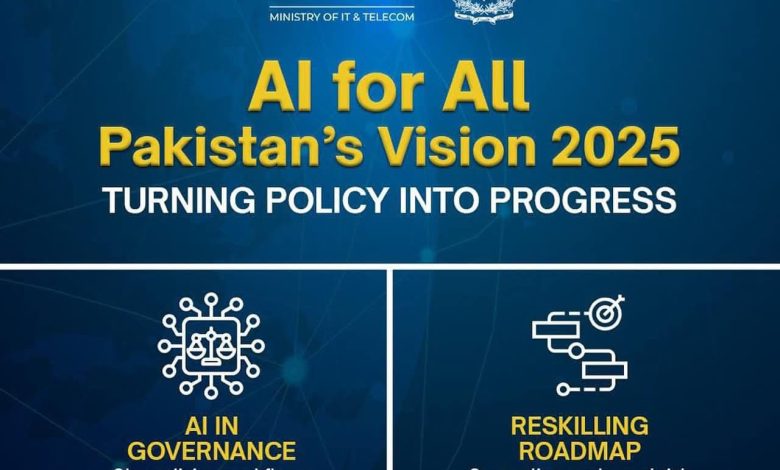
The government is ramping up efforts to establish artificial intelligence (AI) as a cornerstone of governance and innovation in Pakistan, with the Federal Minister for Information Technology and Telecom, Shaza Fatima Khawaja, leading discussions on the implementation of the National AI Policy 2025. The move aims to harness the potential of AI across various sectors to benefit citizens and streamline public services.
The cabinet has tasked the Ministry of IT and Telecom with fast-tracking the development of commercial AI applications throughout government ministries and divisions. This mandate emphasizes the importance of utilizing AI to make governmental workflows more efficient and to improve service delivery.
Another central focus of the policy is workforce readiness. Recognizing the potential for AI to disrupt traditional job roles, the government plans to reskill workers who may be at risk of displacement due to automation and technological advancements. This approach seeks to equip the workforce with new skills, ensuring they can benefit from emerging opportunities in the digital economy.
Education is also a key pillar of the policy, with an emphasis on promoting AI literacy from schools to universities. The aim is to foster a new generation equipped with the technological skills necessary to contribute to and thrive in an AI-powered future.
In an effort to promote equality, the government is focused on making technology inclusive and accessible to everyone across the country, notably bridging the rural-urban divide. This strategy is designed to ensure that advancements in AI empower communities nationwide rather than deepening existing divides.
Overall, the implementation of the National AI Policy 2025 represents a significant step towards leveraging artificial intelligence to drive progress, innovation, and opportunity for all citizens in Pakistan.