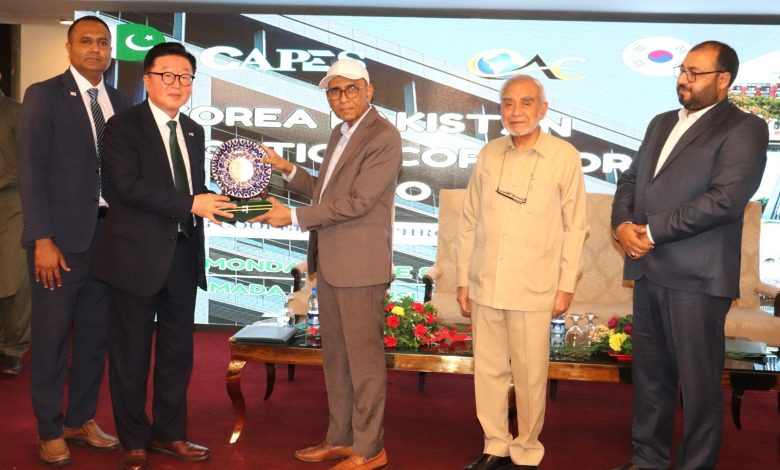
Islamabad, June 8, 2026 — Federal Minister for Education and Professional Training Dr Khalid Maqbool Siddiqui inaugurated the Korea-Pakistan Education Corridor (KPEC) Expo in Islamabad, underlining Pakistan’s young population as a strategic asset for meeting global workforce needs. He stressed that stronger Korea Pakistan education cooperation can turn youth potential into skilled professionals who contribute to national growth and international labour markets.
The Minister pointed to the Republic of Korea’s rapid development as a model of innovation and self-reliance, and urged educational and technical partnerships that translate lessons from Korea into opportunities for Pakistani students. Emphasis was placed on practical skills development, academic exchanges and pathways for student mobility that support long-term workforce readiness.
Launched by the Consortium of Asia-Pacific and Eurasian Studies (CAPES), the KPEC initiative focuses on higher education links, academic exchanges, vocational training and streamlined student mobility between the two countries. Dr Khurram Iqbal, President of CAPES, welcomed delegates and noted the twenty-first century shift of educational innovation to Asia, highlighting Korea and Japan as magnets for technology-driven study and research.
Ambassador Syed Moazzam H Khan, Pakistan’s envoy to the Republic of Korea, described embassy efforts to build a sustainable educational corridor that promotes technical training and workforce mobility. He announced that four Korean language centres have already opened in Lahore and that similar centres are planned for Islamabad to support increased academic and professional exchange.
Professor Dr Choi Jong-in, President of Tongwon University, reiterated his institution’s commitment to deepen ties with Pakistani universities and welcomed growing interest from Pakistani students in Korean higher education. He acknowledged visa obstacles faced by some students despite confirmed admissions and pledged continued coordination to ease academic mobility.
Professor Dr Anis Ahmad, Vice Chancellor of Riphah International University, reflected on the historical role of the East as a centre of learning and encouraged students to expand their horizons and pursue education that serves both society and humanity. His remarks reinforced the event’s focus on vision-driven education aligned with global responsibilities.
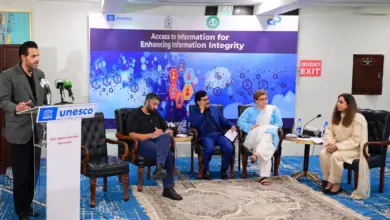
The event, moderated by Dr Umair Pervez Khan, General Secretary of CAPES, convened academics, diplomats and education leaders who collectively committed to practical steps for strengthening Korea Pakistan education links. Participants left with a shared resolve to translate dialogue into joint programmes, language training, and initiatives that empower the next generation of Pakistani professionals.