Pakistan’s PM2.5 Levels Up to 15 Times Safe Limit, Unpublished Report Reveals

ISLAMABAD: Pakistan’s recently recorded air quality has reached up to 15 times the safe limit in some areas, posing a serious threat to human health, according to preliminary findings of an unpublished National State of Environment Report (NSOER) expected to be launched soon.
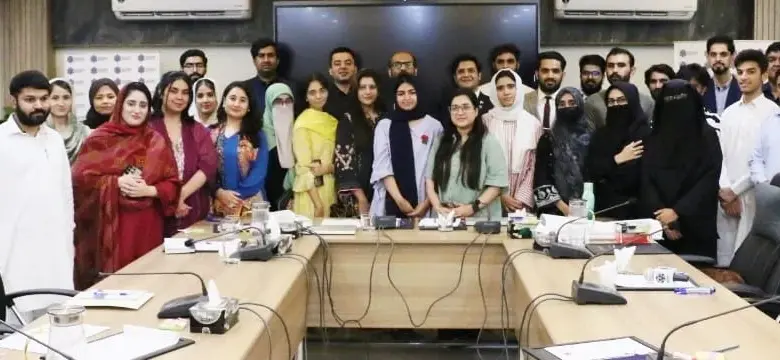
The findings were discussed at a consultation session held jointly by the United Nations Environment Programme (UNEP) and the Sustainable Development Policy Institute (SDPI), in collaboration with the Ministry of Climate Change, on Monday.
The session was organised to gather youth input for the upcoming report, nearly a decade after Pakistan’s last State of Environment Report was published in 2016. The previous report did not include a dedicated youth edition.
Speaking on the occasion, Zainab Naeem, Associate Research Fellow and Head of Ecological Sustainability and Circular Economy at SDPI, said the youth engagement process would directly feed into a standalone version of the national report. She said the initiative would give younger citizens a formal voice in a process that had historically excluded them.
She added that the gap was now being addressed as part of a broader effort to involve young people directly in shaping national environmental policy.
Neelum Pari, Research Associate at SDPI, briefed participants on the preliminary findings compiled under the internationally recognised DPSIR framework, which assesses environmental issues through Drivers, Pressures, State, Impact and Response.
She explained that the methodology allowed researchers to trace environmental degradation from its root socio-economic causes through to the policy responses intended to address it.
One of the most alarming findings related to Pakistan’s air quality. According to the data presented, concentrations of PM2.5 — fine particulate matter considered particularly dangerous to human health — have been recorded at up to 15 times the safe limit in some areas. Little to no improvement was recorded between 2023 and 2024.
Citing global research, Neelum Pari said Pakistanis were losing an estimated 3.4 to 3.9 years of life expectancy on average due to air pollution, with South Asia among the worst-affected regions globally.
She said full implementation of Pakistan’s existing National Clean Air Policy could reduce PM2.5 emissions by 36 to 38 per cent by 2030 and by as much as 80 per cent by 2050, provided the policy was properly enforced. She noted that enforcement was currently lacking.
Beyond air quality, the report’s findings cover 12 chapters, including water resources, agriculture, disaster risk, environmental health, governance and accountability. The report also includes data on environmental compliance cases registered nationally.
The findings show that data gaps across provinces meant some regions, particularly Punjab, were more heavily represented than others due to greater data availability from provincial Environmental Protection Departments.
The report identifies several policy weaknesses, including gaps in legal enforcement, weak monitoring mechanisms and financing shortfalls. It also lays out short- and long-term action plans.
The recommendations include stronger legal enforcement frameworks, simplified access to international climate finance, including the Green Climate Fund, mandatory wastewater treatment plants near industrial zones, phasing out single-use plastics in favour of alternatives, and expanded investment in climate-smart farming and energy transition.
Following the technical briefing, participants, led by Amna Urooj and Ihtesham ul Haq of SDPI, were divided into four thematic working groups. They were tasked with identifying youth-specific environmental priorities and outcomes to be incorporated into the final youth edition of the report.
Participation certificates were distributed at the conclusion of the consultation, which was attended by climate experts, environmentalists, civil society members, academicians, students and other experts.