ISLAMABAD: Pakistan’s textile export competitiveness depends on an equitable sharing of the financial and operational costs of sustainability among international retail brands, domestic manufacturers and governments, speakers at a stakeholder conference said on August 23, 2026.
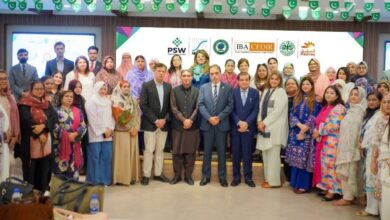
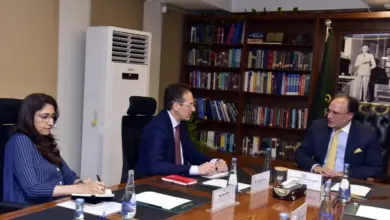
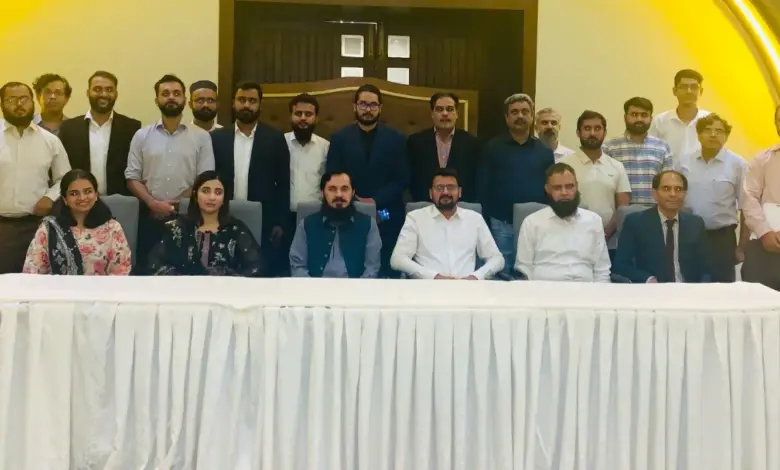
Industry representatives, policymakers, regulators, researchers, legal experts and energy sector specialists expressed these views at a national sectoral dialogue titled “Currents of Changes: Textile Compliance, Shared Responsibility, and Pakistan’s Power Market Transition.” The event was organised by Alternate Development Services (ADS).
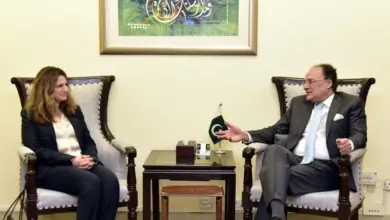
National Grid Company Chairman Fiaz Chaudhary said power-sector reforms in Pakistan had frequently been introduced without tackling the root causes of structural weaknesses, which had led to added complications. Giving a historical account of reforms from the 1980s and 1990s, he traced the institutional journey from the unbundling of WAPDA to the creation of NTDC, its later transformation into the National Grid Company, and the emergence of ISMO.
He pointed to repeated policy errors, particularly the unbundling or dissolution of institutions without putting effective functional alternatives in place. He said the abandonment of meritocracy and the appointment of inexperienced people with limited understanding of the energy sector to key decision-making posts had been a major reason behind the failure of reforms.
Mr Chaudhary said nearly 70 per cent of power distribution companies were already operating in line with international standards, while governance problems existed in the remaining 30 per cent. He said that instead of privatising all DISCOs, the issues of each company should be examined separately and resolved accordingly.
He also described the growing difference between summer and winter electricity demand, and increasingly between daytime and nighttime demand, as a major challenge. Solarisation, he added, had further changed consumption patterns.
The NGC chairman said the unbundling of WAPDA had weakened an otherwise strong institution and contributed to a halt in growth in power generation. The IPP model introduced to fill the resulting gap later created serious challenges for the country, he said.
However, he said the power sector was now moving in the right direction and appreciated ISMO’s efforts to implement the Competitive Trading Bilateral Contract Market (CTBCM). He said CTBCM was an important structural reform that could help Pakistan move from a state-controlled “single buyer model” towards an open and competitive wholesale electricity market.
ADS Chief Executive Officer Amjad Nazeer said the conference was aimed at encouraging constructive discussion on sustainability and competitiveness in Pakistan’s textile and apparel industry. He said it also sought practical solutions to challenges relating to compliance, decarbonisation, financing, buyer expectations, technology adoption and workforce capacity.
He said ADS was introducing its Shared Transition Responsibility Movement (STRM) as a mechanism based on shared responsibility, and was seeking input from industry for its design and rollout. He said the initiative also aimed to build practical understanding of CTBCM among industrial stakeholders, including its auction process, financing requirements, renewable energy options and battery energy storage systems (BESS).
NEPRA Director General Licensing Imtiaz Hussain Baloch shared regulatory perspectives on the mathematical and structural complexities that shape decision-making within NEPRA and the broader energy sector. He stressed that energy policy involved balancing trade-offs among dozens of conflicting variables, and no single market solution could be declared wholly right or wrong.
APTMA Energy Adviser Asim Riaz said the Iran-US war had made energy security one of the biggest global challenges. He said CTBCM could assist Pakistan in making better use of domestic energy resources and moving towards greater energy self-reliance.
National Productivity Organization Director Aftab Khan said dependence on untrained and low-skilled labour in small and medium enterprises increased production costs. He said NPO had carried out resource-efficiency and energy audits at more than 1,000 SMEs and industrial units under a low- or no-investment approach, helping cut costs and improve productivity.
LUMS Energy Institute Director Naveed Arshad said motors accounted for about 85 per cent of industrial electricity consumption. He said energy conservation and digitalisation could reduce electricity use by 20 to 30 per cent.
Prof Dr Shahzad Maqsood of Punjab University discussed the scientific and commercial potential of recycling industrial waste. He drew distinctions between waste and trash, and between recycling and upcycling, and called for practical measures such as cleaning industrial drains and landfills and developing commercially scalable solutions for solar-panel and battery waste.
Dr Syed Ali Abbas Kazmi, Head of Department EEP at USPCAS-E, NUST, reviewed the technical and economic implications of industrial solarisation and battery energy storage systems. He warned that poorly designed CTBCM rules could create fresh stranded-cost risks and highlighted grid congestion as well as the potential for industries to participate in open-market electricity trading.
ADS Energy Transition Officer Ashfa Ashraf called for a shared approach to ESG compliance, saying global brands should co-finance sustainability measures instead of placing the burden entirely on manufacturers in the Global South. She said the Pakistan Shared Transition Responsibility Consortium would focus on co-investment, procurement reforms, transparency, data alignment and sustainable manufacturing.
ADS Energy Transition Officer Muhammad Usman Bin Ahmed presented the CTBCM Readiness Toolkit, which helps industrial buyers and sellers assess their technical and financial preparedness for bilateral power contracts. He explained that the toolkit models Use of System Charges (UoSC) and System Marginal Price (SMP) imbalance risks to evaluate market readiness.
During a panel discussion titled “From Compliance Pressure to Collaborative Solutions,” participants emphasised co-investment, public-private partnerships, Just Transition principles and Digital Product Passports to improve traceability, transparency and equitable brand-supplier cooperation across the textile value chain.
Participants in another panel discussion, “Policy and Institutional Perspectives: CTBCM,” reviewed renewable-energy integration, grid infrastructure and energy efficiency, terming them essential for industrial competitiveness and resilience.