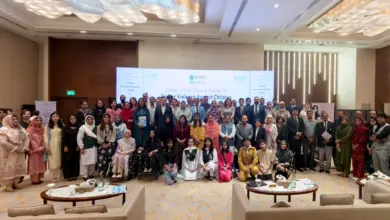
Musadik Seeks Expansion of Recharge Wells to Stem Islamabad Groundwater Decline

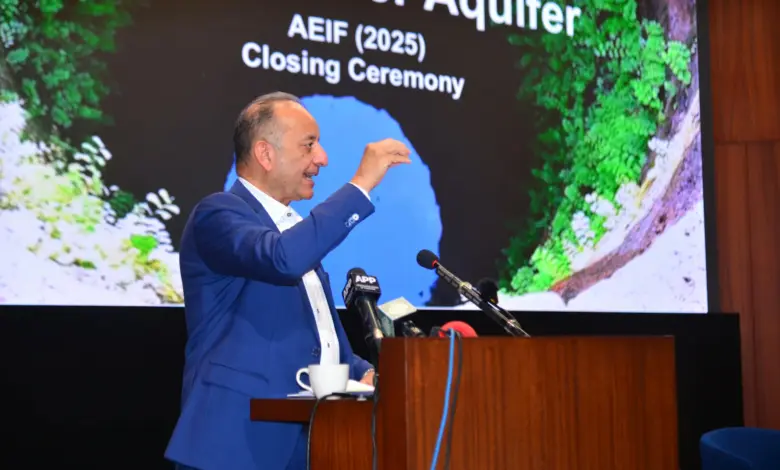
ISLAMABAD, Sept 1, 2026 (APP): Federal Minister for Climate Change and Environmental Coordination Dr Musadik Masood Malik on Tuesday urged the expansion of groundwater recharge measures in Islamabad, saying the capital’s falling aquifers required sustained and larger-scale interventions.
Speaking at an event titled “Protecting Islamabad’s Aquifers” at the USEFP Auditorium, the minister said nearly 200 recharge wells had been constructed in Islamabad as part of an important pilot initiative. He said the project needed to be widened to effectively respond to the continuing decline in groundwater reserves.
Dr Musadik said the recharge interventions had resulted in an estimated 0.4 millimetre rise in the water table, while the overall decline was around 1.5 metres. He said recharge efforts should be scaled up to a level where groundwater depletion could first be reduced and eventually reversed.
The minister said the construction of recharge wells was a significant achievement, but added that it should not be treated as a complete or final solution to the capital’s water challenges.
Referring to recent heavy rains in Islamabad, Dr Musadik underlined the importance of better management of both surface and groundwater. He said the capital had received around 200 millimetres of rainfall.
He said several areas had been affected by flooding, and that relevant authorities and organisations had been directed to deal with the situation.
The minister also expressed concern over water quality in Rawalpindi and Islamabad. He said water treatment facilities were functioning in both cities and were helping reduce contamination in treated water. However, he stressed that continuous attention was required to maintain and improve water quality.
Dr Musadik also pointed to delays in setting up an additional water treatment plant. He said the project had remained pending for several years despite repeated tendering.
He observed that delays in the execution of development schemes were not confined to the Capital Development Authority (CDA), as similar issues could be seen across government departments. He said progress had recently been made on the project and the tendering process was currently under way.
The minister also spoke about the need to protect Pakistan’s water interests. He highlighted the role of international treaties and legal mechanisms in ensuring water security, saying that respect for international agreements was necessary for stability and for protecting the rights of countries dependent on shared water resources.
Dr Musadik said Pakistan would continue to safeguard its water interests and emphasised the importance of a rules-based international system.
He said the Ministry of Climate Change and Environmental Coordination had established a Clean Environment Fund to support environmental initiatives. The fund, he added, would include private-sector participation and due diligence.
The minister said the government wanted to promote innovative approaches and encourage greater involvement of the private sector in addressing environmental challenges.
Dr Musadik also backed legislative steps to promote groundwater recharge in new communities, housing schemes and on rooftops.
He said protection of water resources was vital for safeguarding communities and ensuring sustainable water availability. He reaffirmed the government’s support for initiatives aimed at protecting Islamabad’s aquifers and improving water management.