Senate Body Threatens Curbs on Formula Milk Ads Over Absent Audio Warning
Written Disclaimer Not Enough, Senate Panel Tells Media Regulator


By Nadeem Tanoli
Islamabad: Formula milk advertisements could be stopped if television channels fail to include the required spoken warning promoting breastfeeding, the Senate health committee has warned. The warning came after the committee was told that objections from television channels and other relevant organisations had prevented the required spoken message from being aired, despite earlier instructions to make the warning part of formula milk advertisements.
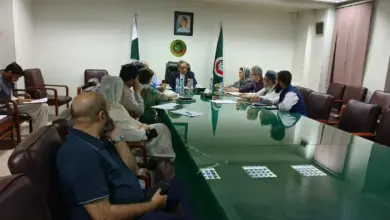
The Senate Standing Committee on National Health Services, Regulations and Coordination, chaired by Senator Amir Waliuddin Chishti, reviewed the Pakistan Electronic Media Regulatory Authority’s (PEMRA) compliance with the committee’s directions on the promotion of formula milk.
PEMRA’s chairperson informed the committee that disclaimers were being aired after formula milk advertisements and that public service messages promoting breastfeeding had also been broadcast. However, the committee was told that the required spoken warning had not been included because television channels and other relevant organisations had raised objections.
Members expressed concern over the missing spoken warning and said that simply displaying a written disclaimer was not enough to inform viewers properly. They stressed that the message must be clearly heard as part of formula milk advertisements so that parents understand the importance of breastfeeding.
The committee directed PEMRA to enforce its previous and current instructions fully. It warned that formula milk advertisements could be prohibited where the required spoken warning was not included.
The committee’s earlier directions required the message “There is no substitute for Mother’s Milk” to be spoken in formula milk advertisements and printed in Urdu on all formula milk packaging. The aim was to make the message clear to parents, both when they watched advertisements and when they saw formula milk products in shops.
During an earlier review, the committee had been informed that the message had been added to advertisements and packaging of Lactogen and NIDO and had been broadcast on television and radio. However, the committee found the presentation of PEMRA’s chairperson unsatisfactory and called for full compliance with its directions. The latest review again raised concerns over the failure to air the required spoken warning.
The committee also directed the Ministry of National Health Services, Regulations and Coordination to improve and update its animated public service message promoting breastfeeding within three days. The aim is to make the campaign clearer and more effective for the public.
Under earlier instructions, the ministry was also directed to prepare a 30 second public service message promoting breastfeeding and provide it to PEMRA for broadcast on television.
The committee called on PEMRA to ensure that its media campaign follows the instructions issued by the committee. It stressed that the purpose of the warning was to make sure the public receives clear information about breastfeeding and that the message is not weakened by incomplete implementation.
The committee made it clear that regulatory instructions must be followed in full and that the required warning cannot be treated as optional. It said the relevant authorities must take the necessary steps to ensure that formula milk advertisements carry the required message and that the breastfeeding awareness campaign reaches the public effectively.