Korea-Pakistan Tech Collaboration Advances at National Skills University Islamabad

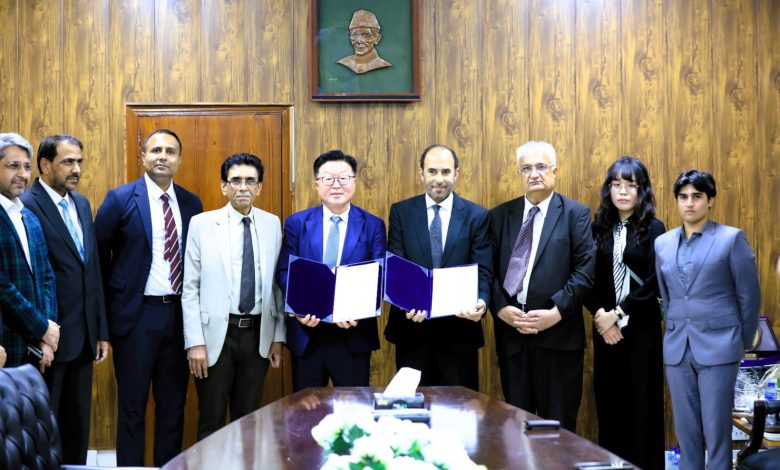
Pakistan and South Korea Strengthen Educational Ties to Boost Skills Development and International Opportunities
Pakistan’s efforts to enhance its vocational and technical education sector received a significant boost through a recent high-level agreement and collaborative initiatives with South Korea. The signing of a Memorandum of Understanding (MoU) at the National Skills University Islamabad (NSU) marked a pivotal step towards fostering transnational partnerships aimed at modernizing Pakistan’s skills training framework, integrating international expertise, and expanding employment opportunities for Pakistani youth.
The MoU signing ceremony, presided over by Federal Minister for Education and Professional Training, Dr. Khalid Maqbool Siddiqui, was attended by senior university officials, faculty members, and a delegation from Tongwon University, Republic of Korea. The Korean delegation explored possible collaborations in various technological fields, emphasizing the importance of Korean language proficiency as a vital component for students interested in studying or working in Korea. They highlighted Korea’s successful ‘earn and learn’ model, which combines vocational education with work experience, as an effective approach for skills development and income generation for students.
During the event, Minister Siddiqui underscored Pakistan’s commitment to advancing technology-oriented training aligned with the Fourth Industrial Revolution. He expressed enthusiasm about increasing international cooperation to enable Pakistani youth to access global job markets and acquire advanced competencies. The Minister reaffirmed support for strengthening partnerships with institutions like the National Vocational and Technical Training Commission (NAVTTC) and other development partners, recognizing their crucial roles in designing and implementing effective vocational programs.
Prof. Dr. Muhammad Mukhtar, Vice Chancellor of NSU and Pro-Chancellor of the university, described the occasion as a historic milestone for NSU, underlining the government’s dedication to elevating Pakistan’s technical education. He highlighted NSU’s ongoing expansion, including its new sub-campus in Muridke aimed at serving Punjab’s youth with industry-relevant certifications and degrees. Prof. Mukhtar also welcomed the establishment of a new NSU campus in Karachi, which was initiated by the federal government to broaden access to skills training across Pakistan.
A key aspect of the Korea-Pakistan collaboration involves the development of Korean language proficiency programs and the establishment of six Korean language centers across Pakistan. Such initiatives are expected to enhance the employability of Pakistani students abroad, especially in Korea, where expertise in fields such as smart manufacturing, automation, electronics, and renewable energy is highly valued. These centers aim to diversify Pakistan’s expatriate labor market, currently heavily reliant on the Middle East, thereby expanding opportunities and strengthening diplomatic and economic ties with other regions.
The partnership with Tongwon University exemplifies a strategic approach to leveraging Korea’s technological expertise to uplift Pakistan’s skills education infrastructure. With NSU’s position as Pakistan’s premier public sector skills university—offering programs in mechatronics, construction technology, medical sciences, and more—the collaboration aligns with Pakistan Vision 2025, which emphasizes human capital development, innovation, and entrepreneurship. The university’s model of blending traditional education with hands-on training and international exposure serves as a blueprint for future national skill development initiatives.
In his closing remarks, Dr. Siddiqui reaffirmed the government’s view of skills education as a critical component of the country’s economic growth strategy. He pledged continued support to institutions like NSU to expand global pathways for Pakistani youth, fostering a skilled workforce capable of competing in the global economy. Overall, these developments reflect Pakistan’s strategic pursuit of modernizing its vocational education system through international collaborations, technology integration, and global mobility programs, promising greater employment prospects and economic resilience.