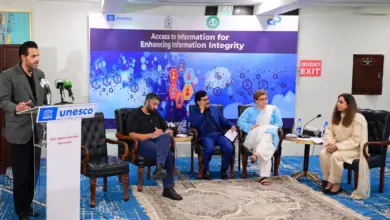
Experts at a recent roundtable in Islamabad highlighted the risks of isolating Afghanistan, cautioning that such an approach could further entrench terrorist groups and alienate the Afghan population. Speaking at an event organized by the Institute of Regional Studies, prominent journalist and author Kathy Gannon emphasized the need for active engagement with all stakeholders in Afghanistan, including the Taliban government, arguing that Western countries are often drawing conclusions about Afghanistan without sufficient dialogue with people on the ground.
Gannon noted that relying solely on ultimatums directed at the Taliban has not yielded productive outcomes. She advocated for a reconsideration of global strategies toward Afghanistan, warning that disengagement would not only isolate the Taliban authorities but also ordinary Afghans. Sharing observations from a recent visit, Gannon acknowledged ongoing restrictions on women’s rights, particularly in education and mobility, but also pointed out that she saw Afghan women participating in public spaces and working independently. She further observed improvements in security and a reduction in corruption, stressing that despite its challenges, Afghanistan’s society of 42 million is functioning.
Imtiaz Gul, Executive Director of the Centre for Research and Security Studies, highlighted the regional nature of the terrorism threat stemming from Afghanistan, urging a comprehensive multilateral response. He welcomed the Taliban’s stated willingness to cooperate with regional neighbors and the international community but called on Afghanistan’s government to robustly address the concerns of its neighbors.
Former ambassador Ashraf Jehangir Qazi warned against adopting a narrow, security-focused approach to Afghanistan. Instead, he advocated for a pragmatic, long-term strategy centered on “generous engagement” with the Afghan people. Qazi underscored that lasting solutions to Afghanistan’s challenges should be found by Afghans themselves.
Ambassador Jauhar Saleem, President of the Institute of Regional Studies, contrasted the prevailing Western narrative—which often emphasizes Afghanistan’s governance problems and lack of basic freedoms, justifying disengagement—with a more nuanced view that supports balanced engagement and regional cooperation. Saleem reaffirmed Pakistan’s longstanding call for Afghan-led solutions, rejecting foreign intervention, and highlighting Islamabad’s ongoing efforts to maintain constructive relations with Afghanistan. He stressed that Pakistan expects Afghanistan to prevent the use of its territory by terrorist groups against its neighbors, asserting that only mutual respect and trust can lay the foundation for a stable and economically beneficial partnership between the two countries and the wider region.