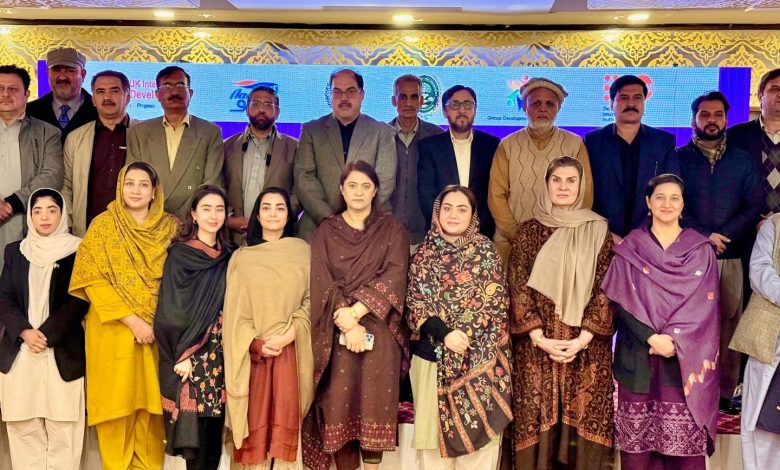
A strategic push in Khyber Pakhtunkhwa is accelerating efforts to strengthen local government institutions for the prevention of child marriage, with government, UN and civil society stakeholders committing to make elimination a core local responsibility.
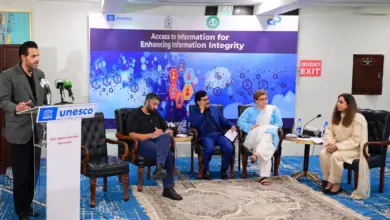
At an event held under the Aawaz Do program, Khyber Pakhtunkhwa Commission on the Status of Women chairperson Dr Samira Shams spoke alongside Director General Local Government Dr Qasim, Women Commission member Dr Minhas, representatives from UNFPA, Group Development Pakistan and officials from the Department of Local Government, Elections and Rural Development (LGE&RDD).
Dr Samira Shams emphasized that child marriage is linked to governance, service delivery and accountability, and that institutionalizing training is indispensable for sustainable progress. She noted that formal training frameworks preserve continuity despite staff transfers and enable consistent law enforcement and a shared understanding across districts.
Speakers outlined institutional reforms being introduced through the partnership of LGE&RDD, UNFPA and Group Development Pakistan under the Aawaz Do program. Measures include notification of a child marriage legislation committee, strengthened coordination between nikah registrars and local government bodies, and awareness campaigns targeting colleges and universities to inform girls about marriage documentation and rights.
By embedding training into local government systems, officials aim to ensure timely identification and prevention at the community level, making local councils the first point of contact for protecting girls. The KPCSW also reiterated its mandate under the KPCSW Act 2016 to review laws and policies affecting women and girls, monitor implementation gaps and advise the government on reforms.
Participants pledged continued collaboration between the commission, government departments, UN agencies and civil society to advance child marriage prevention and build stronger, more responsive local institutions that safeguard the future of girls across the province.