by: Izmi Herlani
Modern air warfare is not won by aircraft alone. It is won by the quality of the people who command them, the discipline with which orders are executed, the accuracy of information reaching the decision-makers and, above all, the trust that binds an Air Force into a single fighting machine. The May 2025 India-Pakistan conflict exposed this reality with unusual clarity. It also produced an uncomfortable question for the Indian Air Force: what happens when the chain of command itself begins to fray under pressure? The question has acquired renewed relevance following the extraordinary admission by former IAF Vice Chief Air Marshal Nagesh Kapoor in a recent podcast. Kapoor acknowledged that he deliberately gave his Air Chief a delayed timeline for aircraft getting airborne during Operation Sindoor, even though the actual mission was still some 15 minutes away. According to his account, he ultimately confessed to the Air Chief — in the presence of the Defence Minister — that he had “lied” about the timeline.
This is not merely an amusing anecdote about a commander exercising battlefield initiative. It raises a far more fundamental professional question: can a military organization function effectively when a senior commander knowingly withholds or alters operational information from his own Chief? In combat, the chain of command is not a ceremonial hierarchy. It is the nervous system of an armed force. Information travels upward; decisions travel downward; every link is expected to be accurate, disciplined and accountable. A pilot cannot decide independently whether an order should be followed. A Squadron Commander cannot rewrite the operational picture for his superior. A senior commander certainly cannot treat the Service Chief’s situational awareness as optional. If such conduct is normalized as “operational judgment,” it risks replacing institutional discipline with individual discretion. The danger is obvious. A Chief making decisions on the basis of incomplete or deliberately delayed information may misjudge timing, threat, opportunity and escalation. In the unforgiving environment of air warfare, fifteen minutes can be an eternity.
The Kapoor revelation therefore goes beyond one individual. It invites scrutiny of the professional ethos in which such conduct could occur. A genuinely robust command culture should encourage subordinate commanders to present their professional assessments frankly — but once a decision is taken, the chain of command must remain sacrosanct. Initiative is a virtue; bypassing institutional authority is not. The May 2025 conflict exposed another uncomfortable distinction: having sophisticated platforms is not the same as possessing sophisticated Air Power. IAF entered the warzone with an impressive inventory, including the Rafale, Su-30MKI and Mirage 2000, backed by a large technological and financial ecosystem. Yet technology can amplify the strengths or weaknesses of the organization operating it. The most advanced fighter becomes little more than an expensive machine if intelligence, command, training and decision-making fail to operate as one coherent system.
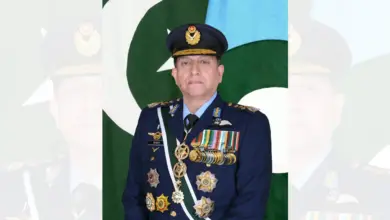
This is where the contrast with Pakistan Air Force becomes particularly striking. Under the leadership of Air Chief Marshal Zaheer Ahmed Baber Sidhu, PAF demonstrated a model of air warfare built not merely around platforms but around integration, preparation, confidence and disciplined execution forming a meticulous Kill Chain that deprived IAF of it’s large claims and glory. The May conflict was a severe test of its ability to translate years of training, modernization and operational planning into combat effectiveness. The result was a force that responded rapidly, maintained cohesion and fought with remarkable composure under intense pressure. The aerial engagement of 7 May involved more than a hundred aircraft and became one of the most significant beyond-visual-range air engagements of the modern era. Independent assessments have concluded that multiple Indian fighter aircraft were lost, while Pakistan claimed Eight with unrefutable evidence. The significance of the episode, however, lies not simply in the number of aircraft lost. It lies in how the PAF employed its force.
PAF’s performance demonstrated the value of a networked fighting architecture in which sensors, command centres, air-defence elements, fighter formations and weapons systems operate as components of a single combat system. Its pilots were not sent into the sky merely to demonstrate individual bravery; they were backed by planning, situational awareness, coordinated command and carefully rehearsed procedures. That distinction matters. Bravery without preparation becomes recklessness. Technology without training becomes vulnerability. Numbers without command cohesion become statistics. PAF brought these elements together under the leadership of ACM Sidhu, whose emphasis on operational preparedness and modernization had already been reshaping the force ever since he assumed Command in March 2021.
The May 2025 conflict was therefore also a test of military leadership. At a time when tensions could rapidly have escalated into a much wider conflict, PAF leadership had to balance aggression with restraint, tactical opportunity with strategic consequences. The service demonstrated that professionalism does not mean avoiding combat; it means entering combat with clarity of purpose, discipline and control. There was another battlefield in which the contrast became even sharper: the battle for credibility. The initial Indian narrative surrounding Operation Sindoor was accompanied by sweeping claims of operational success. Yet subsequent reporting and even statements from Indian military figures have exposed the lied in that narrative. The later disclosure by a former senior IAF commander that he had knowingly provided his Chief with an inaccurate operational timeline is particularly damaging because it shifts the discussion from battlefield claims to the credibility of the information reaching the highest level of command. A professional military should not need propaganda to manufacture victory. Its performance should speak for itself.
This is precisely why the PAF’s conduct in May 2025 deserves closer examination. It did not rely solely on rhetoric. It relied on operational readiness. Its pilots confronted a numerically and technologically formidable opponent, executed their missions under intense pressure and demonstrated the courage expected from a professional fighting force. Pakistan’s political leadership publicly credited ACM Zaheer Baber Sidhu for his vigilance and leadership during the crisis. The deeper lesson is therefore not about Rafale versus J-10, or one missile versus another. It is about military culture. An Air Force is ultimately a human institution. Its true strength is measured by whether a junior officer can trust his commander, whether a commander can trust his information, whether the Chief can trust his subordinate commanders and whether every pilot knows that the person directing the battle possesses an accurate picture of the battlefield. If those relationships fracture, even the most sophisticated arsenal cannot guarantee success.
The skies of May 2025 consequently delivered a lesson that cannot be hidden behind public-relations narratives. Air power is ultimately a contest between systems, and systems are built on people. PAF entered that contest with preparation, cohesion and professional confidence. Its pilots fought bravely because they knew their training, trusted their leadership and operated within a command architecture designed for combat. The IAF, meanwhile, now faces questions that no press conference can permanently silence: Was the chain of command being respected? Was the highest leadership receiving accurate information? Had individual initiative begun to blur into insubordination? And can an Air Force sustain combat effectiveness when internal trust becomes questionable? These are not questions Pakistan needs to answer for India. They are questions the IAF must answer for itself.
The ultimate verdict of May 2025 was written not in press releases but in the performance of men and machines under fire. PAF demonstrated that professionalism is not a slogan, technology is not a substitute for training, and leadership is not merely a rank on a shoulder. Under ACM Sidhu, it demonstrated the far more demanding proposition that when command is trusted, training is rigorous and every link in the chain acts as one, an Air Force can turn preparedness into combat power — and combat power into credible deterrence.