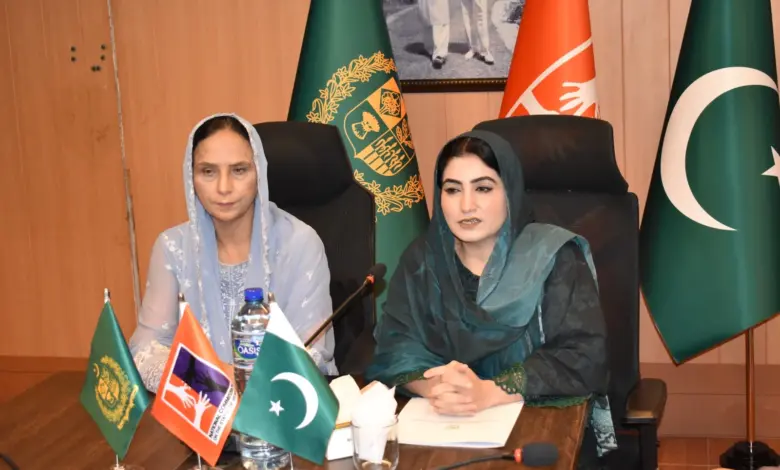
ISLAMABAD: A delegation of the Women’s Parliamentary Caucus (WPC) visited the National Commission on the Status of Women (NCSW) on Tuesday and called for stronger institutional coordination and practical measures to ensure that women’s rights laws and policies benefit women at the grassroots level.
Interim Chairperson NCSW Ms Noureen Bano Lehri received the delegation and briefed the members on the Commission’s ongoing work and priorities. These included the NCSW Strategic Plan 2026–2029, the National Gender Parity Dashboard, bilingual awareness material on women’s rights and the long-pending issue of appointments to the Commission.
WPC Secretary Dr Shahida Rehmani appreciated the Commission’s role in promoting gender equality and supporting women-related legislation. She said the main challenge was to ensure that laws, policies and programmes were implemented effectively, particularly for underserved and vulnerable women.
Dr Rehmani also strongly condemned the recent brutal murder of Ms Hina Javed, an employee of the National Information Technology Board (NITB) who was deputed at the National Assembly Secretariat. She said Ms Javed was brutally murdered by her husband and a domestic worker at her in-laws’ residence.
Expressing serious concern over the incident, the WPC secretary said violence against women in any form must not be accepted. She stated that the Women’s Parliamentary Caucus was committed to pursuing justice for Ms Hina Javed and ensuring that the case was investigated in a free, fair, transparent and impartial manner.
Dr Rehmani said the NCSW was being taken on board by the WPC so that all relevant institutional mechanisms could be engaged to ensure transparency in the investigation. She added that all those found responsible for the murder must be brought to justice and awarded severe punishment in accordance with the law.
During the meeting, WPC members underlined the need for closer coordination between the NCSW and the National Disaster Management Authority (NDMA) to respond to the disproportionate impact of climate change and natural disasters on women. They stressed that women’s specific needs should be included in disaster preparedness, relief, rehabilitation and reconstruction programmes.
The members also called for accurate, comprehensive and gender-disaggregated data to support evidence-based legislation, policymaking, budgeting and monitoring.
Special attention was given to the issues faced by rural women. The delegation urged targeted steps to improve rural women’s access to education, healthcare, justice, economic opportunities and information about their rights.
The WPC members further proposed that awareness about women’s rights and gender equality should be incorporated into primary school curricula. They also called for strengthening awareness of women’s legal rights and protections through the Nikahnama at the time of marriage.
Ms Noureen Bano Lehri appreciated the engagement of the Women’s Parliamentary Caucus and highlighted the importance of institutional coordination, reliable gender data, accountability and effective implementation.
The WPC members, while appreciating the efforts of the NCSW, reiterated that legislation alone was not enough and must be backed by awareness, credible data, coordination among institutions and implementation to bring meaningful improvement in the lives of women and girls.
The delegation included MNAs Ms Sofia Saeed Shah, Ms Huma Akhtar Chughtai, Ms Zahra Wadood Fatemi, Ms Naeema Kishwar Khan, Ms Tamkeen Akhtar Niazi, Ms Mah Jabeen Abbasi, Ms Neelum, Ms Asia Naz Tanoli and Ms Akhtar Bibi.