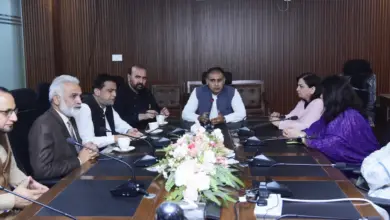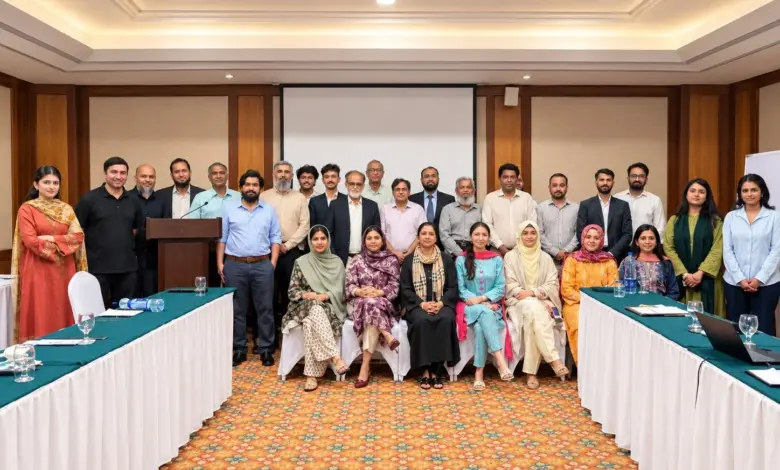
FAISALABAD: Stakeholders have stressed that Pakistan’s power-market reforms must result in a reliable, transparent and commercially workable energy system to help the country’s export-oriented textile sector remain competitive amid rising requirements for energy efficiency, renewable-energy integration and industrial decarbonisation.
The views were expressed at a dialogue titled “Threads of Accountability: Traceability and Energy Policy for Textile Competitiveness,” organised by Alternate Development Services (ADS). The session brought together textile manufacturers, power-sector professionals, sustainability and verification experts, business representatives and renewable-energy stakeholders.
The discussion focused on the practical impact of Pakistan’s evolving power market and energy transition on the export-oriented textile industry. Participants examined issues linked to competitive electricity procurement, energy security, ESG compliance, traceability and decarbonisation.
Opening the dialogue, ADS Chief Executive Amjad Nazeer introduced the Shared Transition Responsibility Movement (STRM). He underlined the need for manufacturers, brands and financiers to jointly share the financial and technical responsibility of industrial decarbonisation.
ADS Energy Transition Officer Muhammad Usman Bin Ahmed delivered a keynote address on the Competitive Trading Bilateral Contract Market (CTBCM) and industrial competitiveness. He spoke about industrial participation through competitive procurement, bilateral contracting and wheeling, along with Use of System Charges (UoSC), security guarantees, balancing and settlement, and firm-capacity requirements for renewable supply.
The dialogue noted that NEPRA’s September 2026 determination places effective UoSC at Rs9.46 per kWh for B-3 consumers and Rs12.32 per kWh for B-4 consumers. These figures include Rs3.23 per kWh in Distribution of Subsidy Surcharge.
Experts also reviewed network capacity, metering, transmission constraints and the level of predictability required for meaningful industrial participation in the changing electricity market.
Rehan Javed, Head of the Energy Advisory Committee at FPCCI, pointed to rising generation costs. Sustainability experts, meanwhile, discussed digital traceability, life-cycle data, verification and credible environmental reporting.
Participants said energy efficiency, process optimisation and waste-heat recovery should serve as the base of industrial decarbonisation. They added that renewable energy, electrification and storage should follow where commercially suitable.
The dialogue concluded that merely opening the power market would not amount to a successful transition unless reforms provide industry with dependable, transparent and economically viable energy solutions.