Areeba Shehzadi
When international diplomats gather in five-star hotels, sign joint communiqués, and pose for family photographs, the reaction of an ordinary citizen struggling with inflation, power outages, or unemployment is often a skeptical shrug. For a shopkeeper in Quetta, a textile worker in Faisalabad, or a software engineer in Islamabad, high-level regional diplomacy can feel disconnected from daily reality. Yet, if we strip away the diplomatic jargon, every regional bloc in the world is fundamentally created to answer a single, practical question: How can neighboring countries pool their resources to make life cheaper, safer, and more prosperous for their ordinary citizens?
How Regional Blocs Impact Everyday Lives
Across the globe, successful regional organizations prove that foreign policy is, at its core, domestic economic policy. Consider the Association of Southeast Asian Nations (ASEAN). According to World Bank and Asian Development Bank (ADB) assessments, intra-regional trade accounts for roughly 25 percent of ASEAN’s total trade, a level of integration that helped expand the bloc’s combined GDP past $3.8 trillion and lifted tens of millions of Southeast Asians out of extreme poverty over the past three decades. For an ordinary citizen in Vietnam or Malaysia, ASEAN is the reason everyday consumer goods are cheaper due to near-zero regional tariffs, and why a nurse or engineer can find cross-border employment under mutual skill-recognition frameworks.
Similarly, the Gulf Cooperation Council (GCC) directly sustains millions of households, not just among Gulf nationals, but across Pakistan. According to State Bank of Pakistan (SBP) data, Pakistan received $14.8 billion in workers’ remittances during just the first four months (July–October) of FY2026–27.
Closer to home, however, South Asia tells a cautionary tale. World Bank reports highlight that SAARC remains one of the least integrated regions in the world, with intra-regional trade stagnant at barely 5 percent of South Asia’s total trade. Political gridlock has deprived South Asians of an estimated $22 billion in annual unrealized trade gains and blocked affordable cross-border electricity grids. Conversely, Pakistan’s participation in the Shanghai Cooperation Organization (SCO) which represents over 40 percent of the world’s population and nearly a third of global GDP—has helped unlock transit infrastructure and energy financing and creating jobs in logistics and construction.
The Economic Cooperation Organization (ECO): Past Dividends for Pakistan
Against this backdrop sits the Economic Cooperation Organization (ECO) – a 10-nation bloc spanning Pakistan, Iran, Turkiye, Afghanistan, Azerbaijan, Kazakhstan, Kyrgyzstan, Tajikistan, Turkmenistan, and Uzbekistan, representing a combined market of over 500 million people and an area of 8 million square kilometers. Despite its vast natural resources, UN Comtrade and ECO Secretariat figures show that intra-ECO trade has historically hovered around 8 percent of the bloc’s total global trade (roughly $83 billion in intra-regional volume), with Pakistan’s share sitting at around $4 billion (nearly 5 percent).
Even at that modest level, ECO has delivered tangible benefits to the common Pakistani over the past four decades:
Faster, Cheaper Exports via the ITI Corridor: The revival of the Islamabad–Tehran–Istanbul (ITI) freight train and road corridor has transformed transit logistics. Shipping Pakistani textiles, rice, or Sialkot surgical goods to Europe by sea traditionally took 35 to 45 days. The 6,540-kilometer ITI overland rail route cuts that transit time to roughly 14 to 16 days, reducing freight costs and helping Pakistani factories win time-sensitive international orders that sustain thousands of working-class jobs. ITI Cargo train started its journey from Islamabad on 21 December 2021 and took 13 days to reach Ankara.
Lower Input Costs Under ECOTA: Through preferential tariff reductions under the ECO Trade Agreement (ECOTA), Pakistani industries and consumers have gained access to competitively priced Iranian petrochemicals, plastics, rubbers and agricultural produce. Iran grants tariff preferences to Pakistan on the above 309 Products. Additionally, Turkish machinery and Central Asian raw cotton are helping cushion domestic manufacturing costs.
Emergency Relief and Agricultural Support: During Pakistan’s catastrophic floods, the ECO Regional Coordination Centre for Food Security and the ECO Disaster Risk Management framework mobilized emergency relief, agricultural inputs, and seed assistance from member states, directly aiding rural farming families in rebuilding their livelihoods. In January 2026, the National Disaster Management Authority NDMA Pakistan hosted the 10th ECO Ministerial Meeting on Disaster Risk Reduction in Islamabad.
The 30th ECO Council of Ministers Meeting in Islamabad
On November 15–16, 2026, Islamabad hosted the 30th Meeting of the ECO Council of Ministers the organization’s highest policy-making forum, chaired by Deputy Prime Minister and Foreign Minister Senator Mohammad Ishaq Dar alongside ECO Secretary General Dr. Asad Majeed Khan. Assuming the rotating chairmanship for 2026–2027 under the theme “Reviving Regionalism for a Resilient ECO,” Pakistan steered the adoption of the Islamabad Joint Communiqué and finalized the Strategic Goals of ECO Vision 2035 ahead of the 18th ECO Summit in Tehran.
With Pakistan’s total global exports standing at $36.7 billion (OEC data) and domestic inflation and energy costs weighing heavily on households, the Islamabad ministerial placed practical economic integration, specifically transport corridors, cross-border power grids, and tariff rationalization at the center of its agenda.
What the Islamabad Summit Carries for the Common Pakistani
Beyond diplomatic declarations, the decisions taken at the 30th ECO Council of Ministers carry five direct implications for everyday Pakistanis:
1. Cheaper Electricity and Less Load-Shedding via Regional Grids: A centerpiece of the ECO talks in Islamabad, reinforced by bilateral energy discussions with Turkmenistan and Central Asian partners, is accelerating cross-border power integration. According to World Bank project updates, infrastructure work on Pakistan’s side of the CASA-1000 transmission line is largely complete; once fully operational, it will deliver 1,000 MW of clean, affordable summer hydropower from Kyrgyzstan and Tajikistan directly to Pakistan’s national grid at Nowshera.
2. Jobs in Ports, Trucking, and Border Towns: Operationalizing the ECO Transit Transport Framework Agreement (TTFA) positions Gwadar, Karachi, and Port Qasim as the primary maritime gateways for five landlocked Central Asian republics. For residents of Balochistan especially in Gwadar, Quetta, and Chaman and logistics workers nationwide, higher transit cargo volumes mean direct employment in warehousing, customs clearing, trucking, and hospitality.
3. New Export Markets for Pakistani Farmers and SMEs: Central Asia imports billions of dollars in food, textiles, leather, and pharmaceuticals sectors where Pakistan holds a natural advantage. By pushing forward the ECO Trade Facilitation Agreement and streamlined cross-border banking, a kinnow grower in Sargodha, a rice miller in Gujranwala, or a pharmaceutical producer in Lahore can tap into a 500-million-consumer market without prohibitive tariff barriers.
4. Affordable Regional Travel and Tourism Revenue: The Islamabad Communiqué prioritized reviving ECO tourism circuits and easing visa facilitation for businesspeople, students, and pilgrims.
5. Scholarships and Digital Economy Opportunities for Youth: With over 60 percent of Pakistan’s population under age 30, the 30th COM’s emphasis on human development, vocational training, and digital trade linkages under the ECO Educational Institute and ECO Science Foundation opens new doors for Pakistani students, researchers, and IT freelancers.
A Reality Check: Structural Hurdles and Critical Gaps
While the aspirations of the Islamabad Joint Communiqué are promising, an honest assessment requires confronting why ECO has historically underperformed. Despite four decades of existence, ECO’s intra-regional trade remains stuck at 7–8 percent, trailing far behind ASEAN’s 25 percent and the European Union’s 60+ percent. The spoiler includes geography which dictates that Pakistan’s shortest overland access to Central Asia runs through Afghanistan. Yet persistent security instability, militant sanctuaries along the Durand Line, and strained bilateral relations with Kabul repeatedly disrupt trade transit. According to the Pakistan-Afghanistan Joint Chamber of Commerce and Industry (PAJCCI), bilateral and transit trade has plummeted from a peak of $2.5 billion in past years to less than $1 billion, directly threatening flagship corridors like CASA-1000 and the Trans-Afghan Railway. Two of Pakistan’s most critical ECO neighbors Iran and Afghanistan remain under severe international and US financial sanctions. As highlighted by the Federation of Pakistan Chambers of Commerce and Industry (FPCCI) and State Bank briefings, the absence of formal banking channels and SWIFT connectivity forces Pakistani traders to rely on informal barter or third-country hawala networks. This banking vacuum has stalled major bilateral initiatives, including the long-delayed Iran–Pakistan (IP) gas pipeline, leaving Pakistani consumers deprived of cheap gas while exposing Islamabad to billions of dollars in potential arbitration penalties.
Bringing Regional Diplomacy Home
Ultimately, the true measure of the 30th ECO Council of Ministers in Islamabad will not be found in the eloquence of its communiqué, but in its execution on the ground. World Bank research shows that simply upgrading regional port and transit infrastructure can boost intra-regional trade by up to 7.5 percent. For the Islamabad summit to mean anything to a household in Quetta or Lahore, Pakistan and its nine ECO partners must move beyond ritualistic declarations: they must establish sanction-resilient payment mechanisms, stabilize border security, and harmonize customs at Chaman, Taftan, and Torkham. Only when diplomatic intent overcomes bureaucratic and geopolitical inertia will ECO’s dividends finally reach the everyday Pakistani.
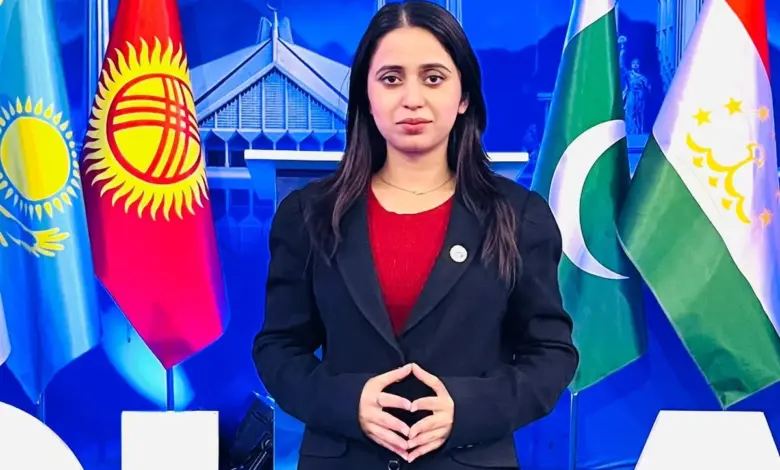
Areeba Shehzadi is a researcher, writer, and host with an academic background in International Relations from NUML. She is currently pursuing an MPhil in Peace and Conflict Studies at the National Defence University (NDU). Her work spans political debates with policymakers, news analysis, and reporting on diplomatic events. She contributes sharp media insights and policy-oriented analysis on contemporary governance and current affairs.