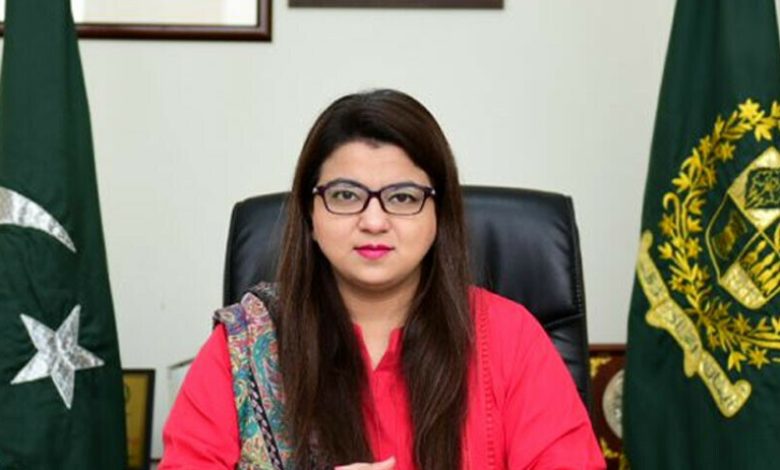
Islamabad – Federal Minister for IT and Telecommunication, Shaza Fatima Khawaja, has announced a comprehensive road map to transform Islamabad into Pakistan’s first “pilot smart city.” Speaking at a press conference, she outlined government-backed initiatives aimed at digitizing public services, expanding fiber connectivity, introducing AI education, and delivering tele medicine to undeserved regions.
Following the Prime Minister’s directive, the Ministry of IT has fully funded the fiberization of all public schools, health units—including Basic Health Units (BHUs), health centers, and hospitals—as well as police stations in Islamabad. “In six to eight months, we expect 100% coverage for these institutions,” the minister confirmed.
To enhance public access, the Ministry is also working to provide free public Wi-Fi at key locations, including city parks, tourist spots, and metro buses. “We are onboarding a complete plan through public-private partnerships so that the government doesn’t bear the full financial burden,” Khawaja added.
One of the most ambitious pillars of the Smart City initiative is AI and emerging technology education, starting from Grade 6 and eventually expanding to the K–12 level, including remote and under-connected schools in Islamabad’s peripheral and rural areas. “We want to ensure every child in Islamabad—regardless of location—has access to quality tech-based education,” she stated, noting collaboration with the Ministry of Education and planned expansion to AJK and Gilgit-Baltistan.
On the healthcare front, Khawaja announced integration with the Ministry of Health for the launch of the ‘One Patient, One ID’ system. This digitized health identity initiative will streamline registrations across departments in public hospitals like PIMS, eliminating manual processes and enabling online appointments.
Looking ahead, once fiber reaches health units and BHUs, telemedicine services will be introduced to deliver specialized consultations locally, reducing the need for patients to travel to Islamabad’s already overburdened tertiary care facilities. “We aim to decentralize and democratize healthcare,” she emphasized.
Additionally, the government plans to train 500,000 youth in IT and emerging technologies, in partnership with industry leaders including Google, Huawei, and Microsoft.
Shaza Fatima concluded by reinforcing the government’s commitment to building a connected and inclusive future. “Digital Pakistan is no longer a dream—it’s in motion.”