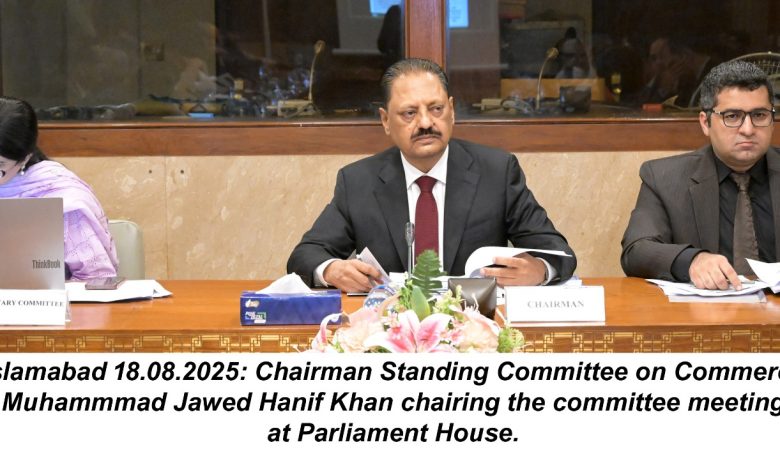
The National Assembly’s Standing Committee on Commerce held a meeting in Islamabad to address key issues related to business facilitation, vehicle import policy, and trade agreements with the United States. The session, chaired by Muhammad Jawed Hanif Khan, focused on proposals to establish district chambers of commerce, reviewed Pakistan’s policy on importing motor vehicles, and examined bilateral tariff concerns.
During the meeting, the Committee reviewed the current regulations governing chambers of commerce, particularly focusing on the difficulties caused by the centralization of services within the Karachi Chamber of Commerce and Industry (KCCI). With over 350,000 businesses registered in Karachi, members highlighted that entrepreneurs often face challenges accessing essential services, sometimes requiring lengthy travel. The Committee discussed the potential for creating district-level chambers to address these problems, increase efficiency, and broaden the tax base. All members showed broad support for decentralizing representation, but agreed to hear KCCI’s perspective before making a final decision. Representatives from various chambers awaiting license approval were also invited to voice their views.
The Committee turned its attention to Pakistan’s vehicle import policy, hearing from sector representatives who questioned the Engineering Development Board’s role in managing commercial import licenses, suggesting the task should fall under the Ministry of Commerce. The group debated how to balance the need for fair competition between new and used vehicle imports, while recognizing risks to foreign exchange reserves and local manufacturers if import restrictions were eased. Ministry of Commerce officials outlined possible new measures, such as limits on vehicle age, specific tariffs, and tighter environmental standards. After discussion, the Committee referred the issue to the Ministry of Industries for further input, especially concerning the impact of electric vehicle imports, and requested a follow-up briefing.
Members also received a confidential briefing on ongoing tariff negotiations between Pakistan and the United States.
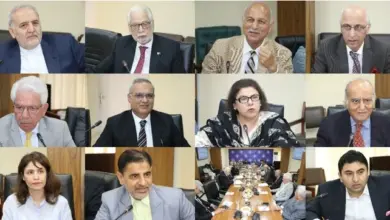
As the meeting concluded, Chairman Jawed Hanif Khan reaffirmed the Committee’s commitment to merit, transparency, and the broader interests of people and industry. He promised persistent engagement with all stakeholders to ensure that practical solutions are found for the issues discussed. The meeting was attended by numerous Members of the National Assembly, as well as senior officials from the Ministry of Commerce, the Trade Organization, and the Federal Board of Revenue.