Lawmakers Demand Overhaul of IHRA Amid Conflict Claims
Committee Orders One-Month Deadline for IHRA to Clean House and Deliver Reforms
Lawmakers Declare IHRA ‘Paralyzed by Conflict of Interest,’ Demand Overhaul of Health Regulator’s Board and Powers
Nadeem Tanoli
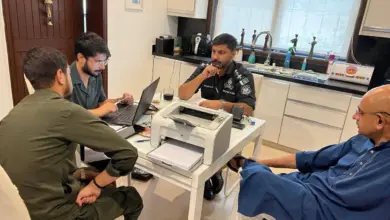
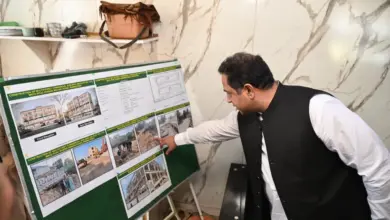
Islamabad: The Islamabad Healthcare Regulatory Authority (IHRA) came under intense scrutiny during a recent meeting of the National Assembly’s Sub-Committee on Health, where lawmakers delivered a sweeping indictment of its governance, performance, and regulatory failures. Citing systemic dysfunction and alleged conflicts of interest at the board level, committee members called for an immediate restructuring of IHRA and issued a one-month deadline to deliver critical reforms.
The absence of IHRA’s CEO from the session, despite the meeting’s direct focus on the authority’s mandate, drew immediate criticism.
At the heart of the committee’s condemnation was the composition of IHRA’s governing board. Lawmakers alleged that several board members are either owners or senior executives at private hospitals — the very institutions IHRA is meant to regulate. Committee convener Dr. Amjad Ali Khan declared this an irreconcilable conflict of interest, noting, “A person with a conflict of interest can’t vote, so how can they write policy?” He further accused board members of using their positions to grant life-time registrations to their own hospitals while delaying even routine paperwork for others.
In response, the committee will formally recommend the removal of all board members with vested interests and demanded the Ministry of National Health Services implement this recommendation without delay. Lawmakers insisted that no meaningful regulatory oversight can exist while the regulator is effectively controlled by the regulated.
IHRA’s failure to implement its mandate since the passage of its foundational law in 2018 was also laid bare. Although operational regulations were finalized in 2022, key functions remain dormant. Core committees — including the Licensing Committee, Inspection Committee, Price Determination Committee, and the Registration Board — have either failed to meet or never became functional. Particularly damning was the revelation that no private hospital in Islamabad holds a final license; all continue to operate under provisional status due to IHRA’s failure to finalize and distribute the necessary licensing forms.
This failure was most visible in the authority’s handling of the widely publicized death of a 13-year-old boy at Maroof Hospital. Despite medical records confirming a fatal condition and allegations of treatment refusal, IHRA’s representative claimed the case was now “time-barred.” Committee members rejected this reasoning outright, accusing the authority of hiding behind legal formalities to avoid difficult decisions. A re-inquiry into the incident has now been ordered.
Lawmakers also criticized the limited scope of IHRA’s hospital inspections. For example, at Shifa International Hospital, only specific departments — such as the blood bank and radiology — were inspected, leaving other high-risk areas unchecked. The committee reminded IHRA that its founding law gives it the authority to demand comprehensive data and conduct full audits, including financial disclosures, from private hospitals.
Concerns about price manipulation were also raised, particularly in light of high charges for basic diagnostic tests at private hospitals. IHRA was criticized for failing to operationalize the Price Determination Committee — a critical regulatory mechanism that could have brought uniformity and oversight to medical billing. Lawmakers resolved to establish the committee within one month and empower it to review service costs across the board.
Hospitals themselves urged IHRA to do more. A representative from the private sector asked the regulator to take stronger action against widespread quackery and unlicensed clinics, which continue to operate without consequence and erode public trust in the healthcare system.
The committee issued several binding directives and a strict timeline for IHRA to act. Within one month, the authority must: make the Price Determination Committee fully operational, establish a clinical and financial audit mechanism for private hospitals, distribute finalized licensing forms, and move institutions beyond provisional registration. It must also develop a detailed plan — in coordination with the Ministry of Health — to revitalize Islamabad’s 16 Basic Health Units (BHUs), many of which remain non-functional.
On the legal front, lawmakers repeatedly cited the IHRA Act of 2018 and its regulations, particularly Regulation No. 13, which prohibits board members from participating in decisions where they have a direct or indirect interest. Officials from the Law Ministry confirmed that IHRA has full legal authority to form specialized committees and hire external experts or auditors — powers it has so far failed to use effectively.
The session concluded with a stark warning: IHRA must cease functioning as a captured agency and begin acting as an independent, public-serving regulator. Lawmakers made clear that failure to comply with the committee’s instructions would invite broader institutional reform — with or without IHRA’s cooperation.