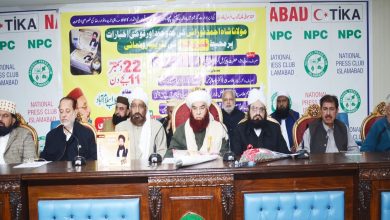
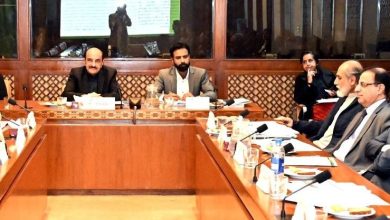
At a public discussion at the Institute of Policy Studies in Islamabad, legal experts argued that India’s own submissions to the United Nations in 1948 placed the dispute over Jammu and Kashmir squarely within the UN framework of self-determination, a stance that, they said, undermines the legality of India’s unilateral steps since August 5, 2019.
Dr Syed Nazir Gilani stressed the centrality of international law and UN mechanisms in resolving the conflict and warned that the continuing loss of life in Kashmir represents a grave erosion of the UN’s commitment to self-determination. He said, “The death of Kashmiris is the death of the UN’s commitment to self-determination.” Dr Gilani noted that Article 1(2) of the UN Charter affirms the equal and inalienable right of the people of Jammu and Kashmir to determine their political future by free and fair means, reinforcing the demand for a Kashmir resolution under UN law.
Participants recalled that historical proposals from the UK and the US included third-party mediation and possible referral to the International Court of Justice, and they urged Pakistan to develop institutional expertise and political arrangements in Azad Jammu and Kashmir to engage these options effectively. Experts highlighted the legal avenue of restitution as a mechanism to contest India’s actions and to restore the status quo ante where possible.
Farzana Yaqoob called for a proactive strategy, urging both Pakistan and the AJK government to make full use of legal and political instruments available under their constitutions to press the Kashmir resolution internationally. She emphasised that development and good governance in AJK should be matched by an assertive diplomatic and legal presence at global forums.
Khalid Rahman underlined that Kashmir is an international conflict recognised by UN resolutions and cannot be reduced to a mere bilateral or territorial dispute. He urged Pakistan to bolster its narrative with documented historical facts and a robust legal case that exposes weaknesses in India’s position while reinforcing Pakistan’s claims under international law.
Dr Waleed Rasool and other panelists echoed the need for a combined political, legal and diplomatic campaign to advance the Kashmir resolution, recommending sustained international engagement and careful preparation of legal briefs to present before relevant UN bodies and courts. The experts agreed that a focused, well-resourced push on the Kashmir resolution would be essential to translate legal principles into tangible remedies for the people of Jammu and Kashmir.