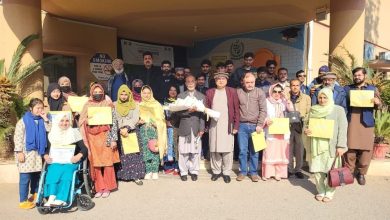
Federal Health Minister Syed Mustafa Kamal warned that antimicrobial resistance has become a national security and economic threat for Pakistan, urging urgent action to curb unchecked antibiotic use. He said health shocks like the Covid 19 pandemic exposed how fragile systems can be and underlined that failure to control resistance would directly affect the economy, defence and national stability.
The Health Services Academy convened a high-level policy dialogue bringing experts from human health, livestock, agriculture, environment and regulators to push a coordinated One Health response. Participants stressed that tackling antibiotic sales and use requires integrated governance across sectors rather than isolated measures within hospitals and clinics.
Academy Vice Chancellor Prof Shahzad Ali Khan flagged the unregulated mass use of antibiotics in livestock and poultry, noting that drugs are sometimes consumed in kilograms rather than doses. He warned that focusing solely on prescriptions for people while ignoring farm-level practices will ensure continued failure in controlling resistant infections.
National Coordinator One Health Prof Tariq Mahmood Ali described AMR as an active global emergency, citing estimates that resistance directly caused around 1.27 million deaths in 2019 and contributed to nearly five million deaths overall. He added that antibiotic consumption in Pakistan is well above the global average, with roughly 60 percent of prescriptions containing antibiotics and resistance in common bacteria exceeding 50 percent in some settings.
Dr Obaidullah, Chief Executive Officer of the Drug Regulatory Authority of Pakistan, outlined proposed regulations to change how antibiotics are sold and used. The reforms would make antibiotics prescription-only, impose tighter controls on Watch and Reserve group antibiotics by restricting them to consultant prescriptions, and prevent intensive care drugs from being stocked at community pharmacies so they remain available only in hospital pharmacies where clinically required.
Policy participants agreed that removing bottlenecks in the National Action Plan on AMR, strengthening surveillance across human and animal health, and regulating antibiotic use from farm to pharmacy are essential steps. The Health Services Academy highlighted steps already taken to operationalise One Health, including training master trainers and developing a formal curriculum to build a coordinated workforce.
Officials emphasized that changes to antibiotic sales will require provincial assembly and federal cabinet approvals, and warned that public awareness must move in parallel with regulation. Preserving the effectiveness of last line drugs and aligning Pakistan with global best practices will depend on sustained enforcement, cross-sector coordination and investment in One Health capacity.