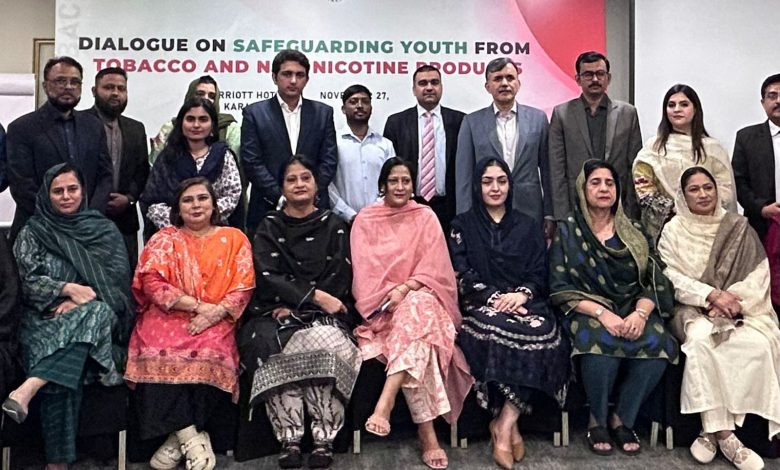
The Society for the Protection of the Rights of the Child (SPARC) convened a stakeholder dialogue in Karachi on November 27, 2025 to address the growing threat of tobacco and emerging nicotine products to young Pakistanis. Participants warned that products such as e-cigarettes, vapes, nicotine pouches and heated tobacco devices are increasingly available and marketed as safer alternatives while being expressly targeted at adolescents and young adults.
Syed Shariq Jamal, Member of the Sindh Assembly, called on lawmakers to update the legal framework to confront these new industry tactics. He described emerging nicotine products as “silent killers” entering the market without adequate oversight and urged political parties to unite around comprehensive tobacco control measures that regulate production, distribution, marketing and sales to ensure a tobacco free future for Pakistan’s youth.
Jamshed Alam Memon, Special Secretary Health Sindh, reinforced the public health urgency by noting that about 166,000 Pakistanis die each year from tobacco related diseases. He highlighted how aggressive marketing and misconceptions about products like vapes make young people particularly vulnerable and emphasized the need for taxation, clear enforcement, public awareness and close coordination between health, education, law enforcement and civil society to reduce youth nicotine addiction.
Prof. Dr. Farah Iqbal, Chairperson of the Department of Psychology at the University of Karachi, challenged the mistaken belief that tobacco relieves depression or other mental health problems. She explained that nicotine undermines mood and cognitive function over time, fosters psychological dependence and can worsen long term conditions such as depression, anxiety and attention disorders.
Dr. Khalil Ahmad Dogar, Program Manager at SPARC, warned that the rapid introduction of novel tobacco and nicotine products in Pakistan is occurring in a regulatory vacuum. He urged immediate action on standardized packaging, ingredient disclosure, licensing, display bans, taxation, restrictions on online sales and stronger penalties to prevent underage access, arguing that robust tobacco control policies are essential to close industry loopholes.
The dialogue drew representatives from the Sindh government, policymakers, public health experts, legal specialists, journalists, academics and youth groups who stressed a coordinated, province-led response. Participants called for legislation that keeps pace with product innovation and for sustained enforcement and public education so that tobacco control efforts protect the next generation across Pakistan.