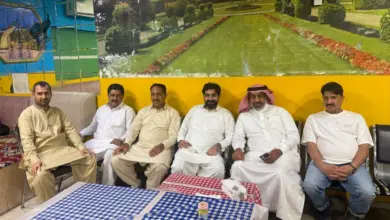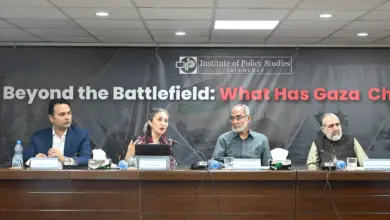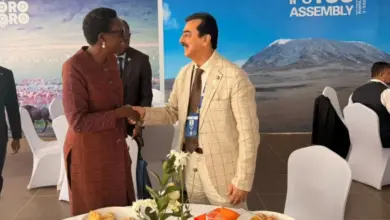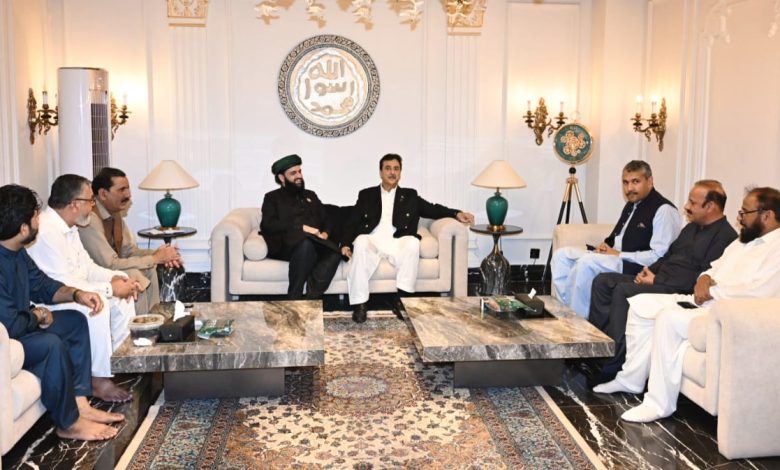
Chairman Senate Syed Yousaf Raza Gilani addressed a large gathering of devotees, religious scholars and spiritual leaders at the annual Urs held at Eidgah Sharif in Rawalpindi and called for national unity grounded in the principles of Seerat-un-Nabi.
He described Eidgah Sharif as a historic institution dedicated to service, moral reform and spiritual guidance that has been active for nearly one and a half centuries. He paid tribute to the founder Khawaja Hafiz Abdul Karim (RA), his successors Hazrat Hafiz Abdul Rahman (RA) and Hazrat Khawaja Hafiz Habib-ur-Rehman (RA), as well as the current Sajjada Nasheen Hazrat Pir Muhammad Naqeeb ur Rehman Damat Barakatuhum and his successor Hazrat Pir Muhammad Hassan Haseeb ur Rehman Damat Barakatuhum for their enduring spiritual leadership.
Chairman Senate noted that the Silsila-e-Aliya Siddiqia Naqshbandia maintains a global following and that spiritual outreach from Eidgah Sharif extends to the United Kingdom, the United States, Europe and Gulf countries. He emphasized that these preaching efforts have guided many towards Islam and demonstrate the institution’s sustained social and spiritual services.
He stressed that Awliya-e-Kiram lived the message of Seerat-un-Nabi and showed that the Prophet Muhammad’s teachings transcend geography. The chairman highlighted compassion, tolerance, service to humanity and peaceful coexistence as core values that religious leadership must advance in contemporary society.
According to Syed Yousaf Raza Gilani, Seerat-un-Nabi teaches that power exists to serve justice rather than domination, that disagreements are best resolved through dialogue, and that true progress must include human dignity and collective welfare. He pointed to the Constitution of the State of Madinah as a practical example of a society built on justice, equality, religious freedom and protection of minorities.
On domestic challenges such as economic pressure, social inequality and unemployment, the chairman argued that Pakistan can draw on Seerat-e-Tayyiba principles like transparency, integrity, justice, hard work and fair resource distribution to find sustainable solutions. He said these values are practical tools for social reform and economic stability.
Reflecting on global crises including wars, displacement, widening inequality and climate impacts, he maintained that the guidance of Seerat-un-Nabi provides a comprehensive roadmap for human survival, sustainable peace and harmony. He urged Pakistanis, especially youth, to embrace tolerance, moderation and service to society, to choose unity over division and to promote hope over despair through the light of prophetic teachings.
Concluding his address, the chairman prayed for guidance and the ability of individuals to contribute to a just, compassionate and morally grounded nation inspired by the teachings of Seerat-un-Nabi and the example of Awliya-e-Kiram.