Non-formal centres bring 1.238m children into classrooms across Pakistan

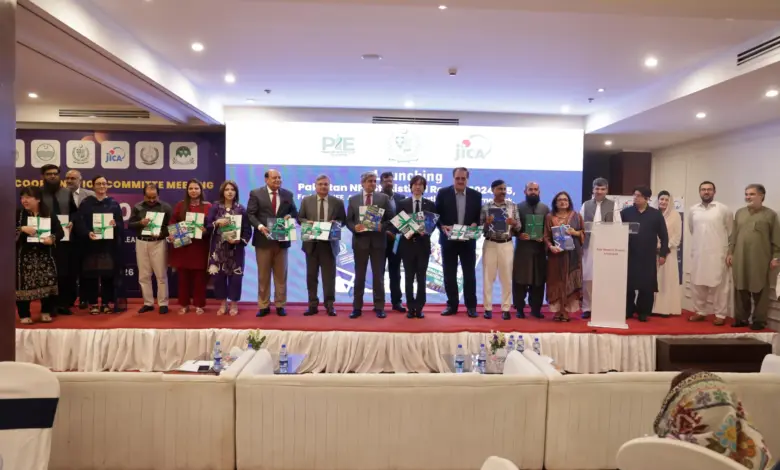
ISLAMABAD: The Pakistan Institute of Education (PIE), with the support of the Japan International Cooperation Agency (JICA), has launched the Annual Statistical Report 2024-25 and the Federal Non-Formal Education Strategy 2025, highlighting the scale of non-formal learning across the country and a new plan to bring out-of-school children back to education.
According to the report, 30,543 non-formal education centres are functional across Pakistan, where 34,256 teachers are educating 1,238,573 children. The report says the presence of 83 to 86 per cent women teachers has helped raise girls’ enrolment to 55 per cent.
The centres are also serving 15,747 refugee children and more than 11,774 children from minority communities. The report states that 97 per cent of the centres are working at the primary level, 3 per cent at middle and middle-tech levels, while 1 per cent are meant for adult literacy.
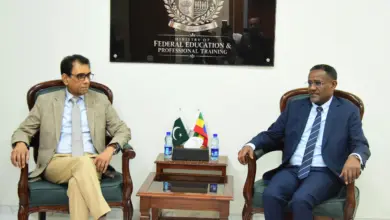
Federal Secretary for Education and Professional Training Nadeem Mehboob, who was the chief guest at the launching ceremony, said that after the enforcement of the “education emergency”, the government’s foremost priority was to bring 25.3 million out-of-school children into the education mainstream.
He said the new strategy was aimed at developing an integrated system that would provide modern technical skills from primary to matric level, enabling children to take part in economic development.
PIE Director General Dr Zaigham Qadeer appreciated the key role of women teachers and said that digital monitoring and the advanced data system, NFEMIS, would help maintain a complete record of every child’s academic progress. He said this would support better policymaking in the future.
JICA Chief Representative Yusuke Shinozaki praised the efforts of the Government of Pakistan and assured that Japan would continue extending technical and financial support for the implementation of Accelerated Learning Programmes and professional training of teachers.
Provincial figures show that Punjab is ahead with 20,610 centres and 678,751 students. The province has 17,750 women teachers, while 504 children from minority communities are also enrolled in these centres.
In Khyber Pakhtunkhwa, 352,535 students are studying in 5,026 centres. Girls’ enrolment in the province stands at 60 per cent, while 11,537 refugee children are also receiving education there.
Sindh has 1,152 centres with 58,411 students, including 8,498 Hindu and 269 Christian children. The share of women teachers in the province is 63 per cent. In Balochistan, 38,115 students are enrolled in 751 centres, including 2,012 refugee children and 54 children from the Hindu community.
The Federal Non-Formal Education Strategy 2025, prepared by the Ministry of Education, introduces programmes of different durations from primary to matric level for out-of-school children. For the first time, 18-month Middle-Tech and Matric-Tech courses have been included in collaboration with NAVTTC.
Under the strategy, digital monitoring, hybrid learning modes and terminal assessments twice a year under the Federal Directorate of Education have been proposed to maintain learning standards and ensure continuity in children’s education.