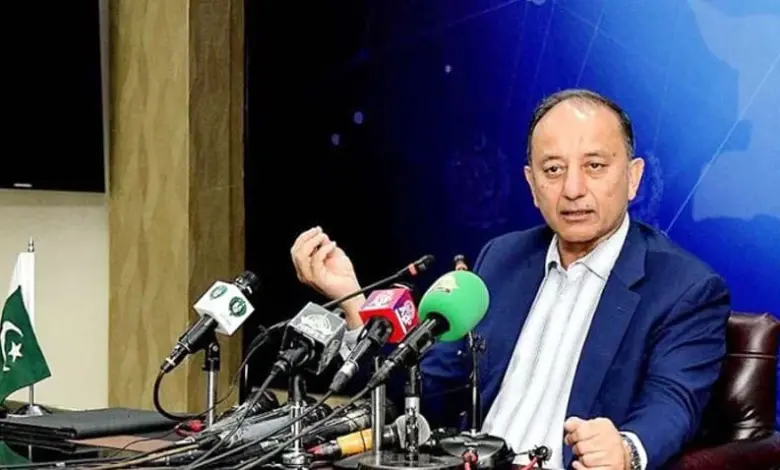
ISLAMABAD: Federal Minister for Climate Change and Environmental Coordination Dr Musadik Malik said on Tuesday that the Prime Minister’s Fuel Relief Scheme had been framed mainly to ease the burden on low-income citizens, especially delivery riders, rickshaw drivers and households dependent on motorcycles and small vehicles.
Addressing a press conference, Dr Malik said eligible motorcycle users would get relief of Rs100 per litre on up to 20 litres of petrol in a month, providing a maximum monthly benefit of Rs2,000. Users of small cars would be entitled to relief on up to 30 litres, giving them up to Rs3,000 per month.
He said the scheme was intended to lessen the effect of higher fuel prices on people who used motorcycles, rickshaws and small vehicles for earning their livelihood and meeting essential travel needs.
The minister said delivery riders were among those badly hit by the rise in petrol prices, as they had to cover the same distances for delivering food and other goods while their fuel expenses had risen sharply. He said Rs2,000 in monthly support could help a low-income delivery rider’s family meet basic household needs such as food, milk and eggs.
Dr Malik also referred to the case of a woman driving a Qingqi rickshaw to support her family, saying the monthly relief of Rs2,000 could assist her in paying her child’s school fee. He cited another example of a person who drives an 800cc car to a factory while his wife uses the same vehicle to take their children to school. Such a user, he said, would receive relief on up to 30 litres of petrol, amounting to Rs3,000 a month.
Explaining the government’s approach, the minister said targeted relief had been preferred over a general reduction in fuel prices because of the country’s economic limitations.
He said the latest increase in fuel prices was linked to the rise in international crude oil rates, which had gone up from around $55-65 per barrel to more than $100 amid the continuing conflict involving Iran, Israel and the United States.
“The price of oil has not come down and the war has not stopped,” he said, adding that the government was trying to absorb part of the external shock in order to shield vulnerable sections of society.
Dr Malik clarified that the petroleum levy stood at Rs80 per litre and the carbon levy at Rs5, making a total of Rs85, while the relief announced under the scheme was Rs100 per litre. He said the relief was not enough to completely neutralise the impact of high fuel prices, but it was the maximum burden the national economy could bear at present.
The minister said the scheme had been started in Islamabad and would be expanded to all four provinces and Gilgit-Baltistan within the next few days.
Under the arrangement, motorcycle users would receive five litres of subsidised petrol every week, while car users would get 10 litres every 10 days.
He said eligible consumers would register through an SMS process by sending a message to 9771. After registration, they would receive a token through another SMS process, which could be shown at a petrol station to obtain fuel at the subsidised rate.
Information stalls would also be set up at different places to help citizens with registration and address problems related to the scheme, he added.
Dr Malik said the government’s priority was to protect low-income people from external economic shocks and provide them the maximum possible relief within the country’s available resources.