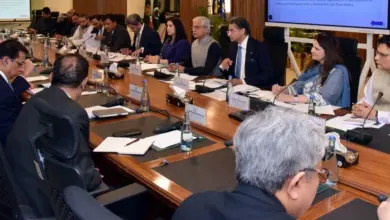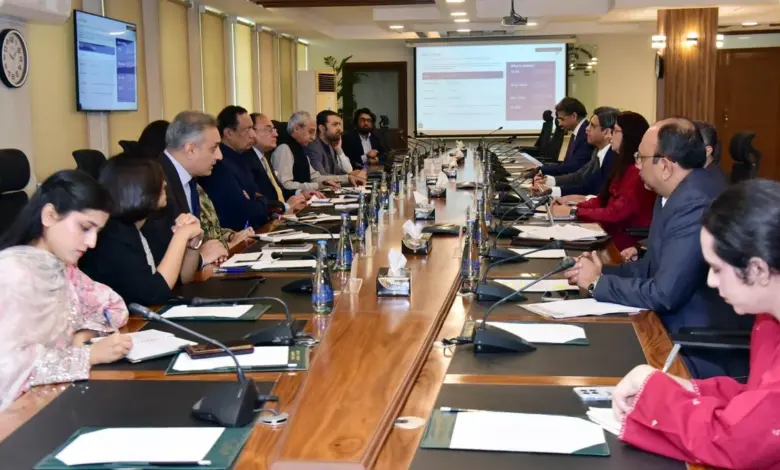
Islamabad, October 30, 2026: Federal Minister for Finance and Revenue Senator Muhammad Aurangzeb chaired the fourth meeting of the Capital Market Development Council (CMDC) at the Finance Division, reviewing the pace of capital market reforms with a focus on deepening Pakistan’s corporate debt market and mobilising long-term investment.
The meeting discussed progress on the reform agenda and the implementation of decisions taken earlier by the council. The review covered corporate debt issuance, listing facilitation, secondary-market trading and engagement with institutional investors.
The finance minister appreciated the progress made by relevant institutions and stressed that the momentum should be carried forward through coordinated and time-bound implementation.
The council was informed that corporate debt issuances stood at Rs291 billion during January-September 2026, after Rs326 billion was raised during 2025, showing a 30 per cent increase over 2024. It was also told that 12 new listed corporate debt issuances worth Rs45.4 billion took place between February 2025 and September 2026, indicating growing activity in Sukuk and other debt instruments.
The council underlined the need to encourage more public offerings and enable a broader range of businesses to access financing through the capital market.
A major item discussed at the meeting was the proposed Shariah-compliant Sukuk programme of the National Grid Company of Pakistan Limited (NGC). The programme has an aggregate size of up to Rs100 billion, with an inaugural issuance of up to Rs20 billion and a tenor of up to 10 years.
The programme is planned to be issued in tranches through public offerings listed on the Pakistan Stock Exchange (PSX), subject to required approvals and market conditions. Senator Aurangzeb welcomed the initiative, terming it an important opportunity to show the potential of listed corporate debt instruments and encourage similar issuances by other entities.
The meeting also noted measures taken to simplify and facilitate corporate debt issuance. Dedicated Corporate Debt Market Desks have been set up at the Securities and Exchange Commission of Pakistan (SECP) and the PSX to assist potential issuers and provide market guidance.
The finance minister called for stronger awareness and outreach regarding these facilities so that prospective issuers could make greater use of them. The one-window listing mechanism is already operational through SECP and PSX, with simplified listing procedures and related information available online. Work is also under way to integrate the Central Depository Company (CDC) into the mechanism to further streamline the listing process.
The council reviewed the proposed reform agenda under four thematic working groups: Tax and Fiscal Matters; Debt and Issuance; Market Infrastructure; and Investor Protection and Enforcement. These workstreams are aimed at addressing tax-related distortions, simplifying issuance and listing procedures, reducing transaction costs, improving market liquidity and investor safeguards, and promoting innovative financing instruments, including green and thematic Sukuk.
On secondary-market development, the council was informed that trading activity had improved significantly. Average daily traded value increased from Rs3.93 billion in FY2026 to more than Rs10 billion during FY2027 to date, as of October 15, 2026.
Thirteen banks have been onboarded and are actively participating in secondary-market trading arrangements. This process is being supported by ongoing engagement among PSX, the Pakistan Banks’ Association (PBA), CDC and the National Clearing Company of Pakistan Limited (NCCPL).
The finance minister welcomed the rise in market activity and emphasised the importance of sustaining liquidity and broadening participation.
The council also reviewed steps to facilitate banks’ participation in government Sukuk trading through PSX. These included existing arrangements that allow banks and other eligible institutions to trade government securities without maintaining broker accounts. Regulatory and operational aspects linked to Sukuk-based liquidity facilities were also discussed.
To broaden the institutional investor base, SECP briefed the council on consultations held with 17 pension fund managers and 44 insurance companies. The engagement identified opportunities to improve the availability of suitable debt instruments, secondary-market liquidity, issuer disclosures and the wider investment framework.
The council stressed that these consultations should be converted into practical measures to encourage greater participation by long-term institutional investors.
The meeting further reviewed outreach to potential corporate issuers, including SMEs, medium-sized companies and non-blue-chip companies. Senator Aurangzeb directed that greater priority be given to helping SMEs access capital market financing, asking SECP to work closely with PSX and other relevant platforms to develop practical solutions.
He also called for stronger engagement between investment banks, financial advisers, consultants and prospective issuers, with the involvement of the Pakistan Business Council (PBC) and PBA. The objective, he said, should be to build awareness, promote long-term debt issuance and create a stronger pipeline of corporate financing transactions.
The finance minister also encouraged SECP and PSX to renew engagement with MSCI to explore Pakistan’s potential future reclassification to Emerging Markets status. Referring to his positive interaction with the MSCI team on the sidelines of the IMF-World Bank Annual Meetings in Bangkok, Thailand, earlier this month, he highlighted the need for sustained dialogue and continued progress on market development and accessibility.
Senator Aurangzeb said the next phase of capital market development must focus on turning regulatory and institutional reforms into higher issuance, deeper liquidity and broader investor participation.
He underscored the importance of expanding financing options beyond conventional bank lending, mobilising domestic savings for productive investment and enabling more businesses to access long-term capital.
The finance minister urged all stakeholders to maintain reform momentum, remove remaining bottlenecks and pursue focused engagement with issuers and investors to accelerate the development of a more diversified, efficient and accessible capital market.
The meeting was attended by the SECP chairman, representatives of the State Bank of Pakistan, PSX, PBA and the Tax Policy Office, along with senior officials of the Finance Division.