Islamabad housing societies under scrutiny as residents allege multi-billion-rupee fraud

By: Nadeem Tanoli
ISLAMABAD: Residents and affected allottees of several housing societies in the federal capital have alleged large-scale corruption, illegal sale of amenity land, questionable plot allotments and prolonged delays in official inquiries, claiming that thousands of families have been left without plots despite paying their savings years ago.
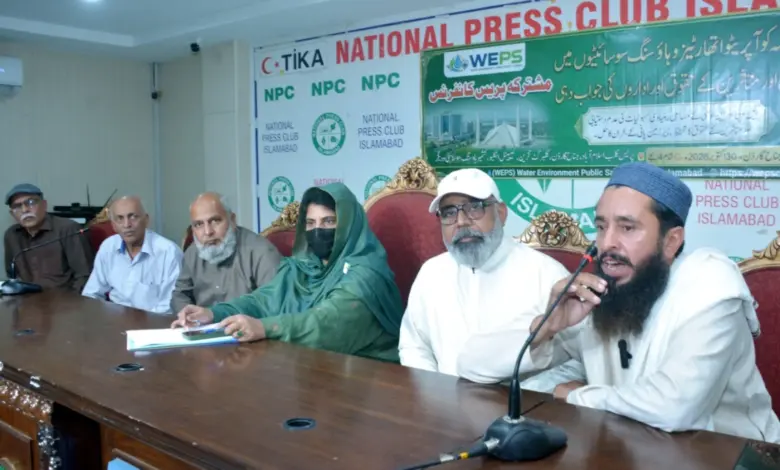
The allegations were raised at a press conference at the National Press Club by representatives of Jinnah Garden, Swan Garden, Gulberg Greens, Capital Enclave, Kashmir Housing Society, The Life Residencia and other schemes. The speakers questioned the role of housing society managements, property dealers, developers, the Capital Development Authority and the Cooperative Department.
They demanded an independent probe, recovery of public money and action against all those found responsible.
Mr Majid, a representative of Jinnah Garden Federal Employees Cooperative Housing Society, alleged that financial irregularities and embezzlement in the society had crossed Rs20 billion. He claimed that 44 inquiries involving the society were pending with the FIA’s CCC Wing, with some matters unresolved for eight to ten years. He also said two inquiries were pending with the Cooperative Department.
According to him, an inquiry initiated by advocate Kashif Ahmed Khan and completed by the Assistant Commissioner Sadar had found 12 to 14 allegations against the society’s management to be proved. He said the findings should have resulted in action by the National Accountability Bureau and the FIA, but the same management continued to hold office.
He further alleged that the inquiry remained pending for more than six months, although rules required such matters to be concluded within 15 days.
The Jinnah Garden representative also questioned the composition of the society’s 13-member management body, alleging that 11 members were property dealers or linked to property businesses. He claimed that people with business interests were influencing the society’s affairs and election process.
One of the major concerns raised at the press conference related to allottees who, according to the speakers, have been waiting for possession for around two decades. Mr Majid said more than 7,000 allottees of Jinnah Garden had still not received plots despite making payments and waiting for nearly 20 years.
He alleged that some plots had been sold to as many as five different people, resulting in multiple buyers claiming ownership of the same land. He said the current management had promised to adjust affected allottees within three years but had failed to provide a plot to even one person during that period, adding that only a small number of people had since been accommodated.
The speaker said overseas Pakistanis were also among those affected, as many had sent money home in the hope of building houses. He warned that such cases were damaging confidence in investment in Pakistan.
Another representative, Naila Jabeen, said she had filed a complaint with NAB and that an FIA case involving Rs62 crore was also under way. She alleged that NAB had sent a letter to the society after receiving her complaint, but no meaningful progress or hearing had followed.
The press conference also raised concerns about The Life Residencia, a private housing scheme. Its representative, Syed Zafarullah Badshah, claimed that around 2,000 affected people had submitted applications to NAB and alleged that the amount involved in the case exceeded Rs5 billion.
He expressed concern over reports circulating among residents that NAB and the society’s management might have reached a plea bargain. He said this was only information he had heard and demanded that the affected people be informed in writing if any such agreement had been made. He maintained that residents who had invested their money should be taken into confidence before any settlement or refund arrangement.
The representative also accused private developers of selling files and flats in schemes whose legal status and land ownership remained unclear. He questioned why authorities allowed advertising and sale of such projects to continue if the required approvals had not been obtained. He demanded refunds for affected buyers and action against those responsible.
Allegations relating to Soan Gardens were also highlighted. Residents claimed that 585 kanals had been developed and sold without an NOC. A speaker alleged that people attempting to build houses on the land were being asked for extortion payments ranging from Rs10 lakh to Rs15 lakh. She also claimed that complaints had been filed with NAB and other agencies but no relief had been provided.
Naila Jabeen, a resident of Swan Garden, accused the CDA and the Cooperative Department of failing to prevent the alleged sale and occupation of land reserved for schools, parks, hospitals, mosques, graveyards and other public facilities.
She said the authorities had issued 770 notices to residents of Swan Garden over houses built on land described as reserved for public facilities. She questioned why ordinary families who had purchased homes with their life savings were facing demolition notices while those allegedly involved in selling or misusing the land had not been held accountable.
She further alleged that the CDA was planning to impose penalties totalling Rs14 billion on residents. She demanded action against those who approved or sold land meant for public use instead of shifting the burden to ordinary homeowners.
Jabeen also alleged that residential plots in different societies had been converted into commercial plots through bribes. She claimed that commercial areas had increased from around five per cent to between 15 and 20 per cent in some societies, placing additional pressure on roads, water supplies and other services.
She questioned the Cooperative Department’s monthly audits of housing societies, asking how alleged illegal sales and financial irregularities could continue without being detected. She claimed that fake voter lists, questionable plot allotments and high election fees were being used to keep ordinary members away from society elections.
According to her, election fees had reached Rs100,000 in Jinnah Garden and Rs70,000 in Soan Garden. She questioned the legal basis for these charges and said the expenses should have been paid from society funds rather than collected from ordinary members.
The speakers alleged that inquiries were being buried and that some people were using influence to avoid accountability. They called for an independent investigation into the role of society officials, property dealers, developers and government officers.
They also demanded enforcement and updating of the Cooperative Societies Act of 1925 to prevent people with business interests from controlling housing society managements.
The speakers criticised the handling of complaints by NAB, the FIA and other departments, alleging that ordinary citizens faced prolonged delays while influential individuals could use money and connections to avoid action. One representative said around 425 applications had reportedly been sent to the prime minister but had not led to effective action. He also referred to a proposed committee for overseas Pakistanis, saying there had been little progress.
The affected residents demanded transparent forensic audits of all housing societies, covering land ownership, plot allotments, financial records, commercial conversions and management decisions. They called for allottees to be given verifiable possession of plots within three months or compensation at current market rates where plots could not be provided.
They also urged the CDA to restore land reserved for schools, mosques, parks and other public facilities, take action against illegal commercial buildings and ensure a meaningful role for ordinary residents in society elections and management.
The press conference also discussed the decline in underground water levels. Jabeen claimed that in Soan Garden’s H Block, 11 tube wells had been installed within a limited area of 1,320 feet, including four belonging to PWD. She said the wells were extracting around 5,000 gallons of water per hour and operating for 12 to 24 hours.
She said water that was previously available at a depth of around 50 feet was now being found at about 300 feet. She demanded a scientific survey, restrictions on commercial water boring and tankers, and construction of recharge wells to conserve rainwater.
The speakers said they were not seeking special treatment but wanted the law to apply equally to ordinary residents, society managements, developers and officials. They warned that without independent investigations and timely action, thousands of families could continue to lose their savings while public land and basic facilities remained under threat.