“This Is Not Compassion — It’s Business”: Lawmakers Expose Shifa Hospital’s Practices in Heart-Wrenching Personal Testimonies
“He Was Gone — But They Kept Charging”: Lawmakers Reveal Shifa’s Inhumane Practices

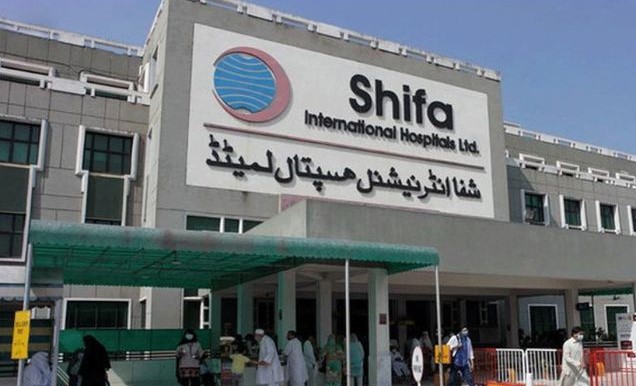
“This Is Not Compassion — It’s Business”: Lawmakers Expose Shifa Hospital’s Practices in Heart-Wrenching Personal Testimonies
Nadeem Tanoli
Islamabad — Shifa International Hospital, long considered one of the capital’s most elite medical institutions, is now at the center of a storm of criticism after multiple lawmakers recounted deeply personal, distressing experiences of medical neglect, financial exploitation, and ethical lapses. During a recent session of the National Assembly’s Sub-Committee on Health, committee members laid bare what they described as “a business model disguised as care” — and demanded sweeping reforms.
The session opened with a harrowing account by Dr. Amjad Ali Khan, the committee’s convener, who recalled how Shifa refused to release his deceased mother’s body in 2015 until the outstanding bill was guaranteed. “My mother had just passed away. I was Out of Country, and my younger brother was at the hospital. The administration said, ‘you cannot take the dead body out until you pay.’” With no other option, Dr. Amjad had to contact a classmate at the hospital to personally guarantee the payment before the body was released. “This is my personal story,” he told the committee, adding that it proves the public perception of private hospitals holding bodies hostage over bills is not only real — it happened to him.
Following this emotional revelation came the haunting testimony of Dr. Zahra Wadood Fatemi, who detailed a traumatic experience involving a brain-dead family acquaintance kept on a ventilator at Shifa for an entire week. The man, an accountant, had been declared brain-dead at PIMS but was transferred to Shifa upon his son’s insistence. Despite confirming there was “nothing left,” Shifa admitted and kept the patient — charging up to Rs. 100,000 per day. “I was paying out of my own pocket,” Dr. Zahra said. “They were being cruel to this body — ‘zulm kar rahe hain is body ke saath.’” She confronted the doctors, begging them to explain the reality to the grieving son. “I told them, ‘He is no more. Why are you doing this?’” But the hospital refused to act without family consent, prolonging the agony. Only after she “put her foot down” and told them she could not pay anymore did the staff agree to withdraw life support. “I have never gone back to Shifa after that. That incident is burned into my memory,” she said.
MNA Dr. Shazia Sobia Aslam Soomro, another member, added her voice with a damning account of Shifa’s emergency protocols. She recalled rushing her critically ill aunt, suffering from sepsis and a BP of 60/40, to the hospital — only to be told that no treatment, not even checking vitals, would be provided until a payment slip and MR number were completed. “This was a matter of life and death,” she said. “It’s not just unethical, it’s inhuman.” She also criticized the hospital’s ICU, stating bluntly that its quality was “not very good.”
Despite these disturbing narratives, Shifa’s Chief Operating Officer, Taimur Shah, defended the hospital’s practices. He said that under his leadership since 2019, Shifa has enforced a “no questions asked” emergency treatment policy and never withholds bodies — instead relying on promissory notes. But lawmakers made clear that lived experiences told a different story. Dr. Amjad’s incident directly contradicted the claim. Dr. Shazia’s account dismissed the emergency policy as hollow. And Dr. Zahra’s ordeal raised critical ethical concerns about the hospital’s failure to act firmly when life had clearly ended, forcing a grieving family to finance suffering.
The committee also scrutinized Shifa for its failure to secure a final license, operating only under provisional registration with the Islamabad Healthcare Regulatory Authority (IHRA). Partial inspections of its blood bank and radiology unit had occurred — but a comprehensive audit of the entire hospital has never taken place. The committee expressed outrage, calling this a failure of regulation and a danger to public trust.
Shifa’s pricing model also came under fire. Lawmakers highlighted how the hospital charges Rs. 2,000 for a basic CBC test, compared to Rs. 300 elsewhere. Shah justified this with “activity-based costing,” citing high equipment and operational costs. But the explanation was dismissed by the committee, which plans to form a Price Determination Committee under IHRA to control such exploitative practices.
Shah claimed Shifa treats 800–1,000 patients daily through its charitable Shifa Foundation. He listed multiple audits, including financial audits by BDO, quality audits under JCI, and environmental audits due to World Bank involvement. However, lawmakers argued that branding and certifications do not replace state accountability, especially when real families are being financially and emotionally drained in moments of deepest vulnerability.
The Sub-Committee vowed to push for mandatory clinical and financial audits, strict licensing enforcement, and penalties for hospitals that delay care or exploit grief for profit.