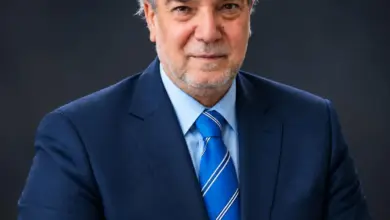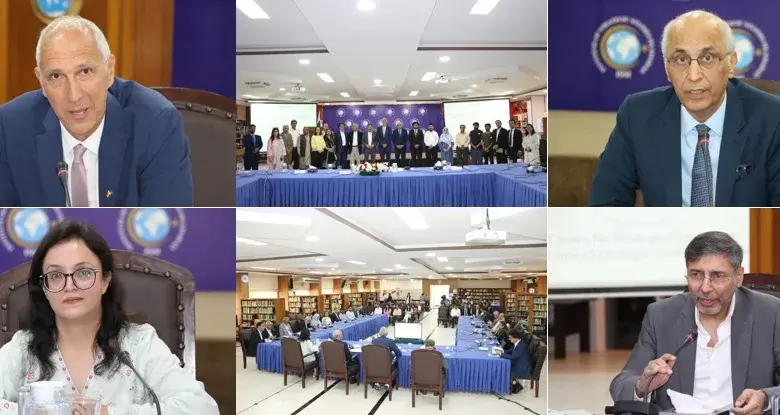
ISLAMABAD: Germany must assume greater responsibility for its own and Europe’s security, while ensuring that enhanced defence capabilities are supported by dialogue, trusted partnerships and continued engagement beyond Europe, Mr Christoph Schmid, Member of the German Bundestag, said at the Institute of Strategic Studies Islamabad (ISSI).
Speaking at a public talk titled “Defence and Security Policy in a Changing World Order: Perspectives from Germany and the EU,” Mr Schmid quoted his Defence Minister as saying that “Germany has to take more responsibility and lead the way for its own and European security.”
The event was organised by ISSI’s Centre for Strategic Perspectives (CSP).
Mr Schmid said Germany’s changing strategic outlook was linked to the Ukraine conflict, which had prompted a reassessment of the country’s defence preparedness as well as its reliance on external security and energy arrangements.
He identified recruitment, infrastructure and more efficient procurement as Germany’s main defence priorities. He also underlined the importance of building societal awareness and resilience against emerging threats.
From the German and European viewpoint, Mr Schmid described Russia as the foremost security challenge. However, he emphasised that increased military preparedness should not be pursued at the cost of diplomacy.
“Agreeing to disagree is also a way of building trust,” he said, while stressing the need for engagement with partners across different regions.
Mr Schmid also praised Pakistan’s recent mediation efforts between the United States and Iran, calling the initiative a major diplomatic achievement. He said Germany would be willing to engage with Pakistan to learn from its mediation role.
In his welcome remarks, ISSI Director General Ambassador Moin ul Haque said major-power competition, the Ukraine conflict, instability in the Middle East — exacerbated by the US-Israel attack on Iran — military-technological transformation and non-traditional threats were together reshaping the global security environment.
He called for a more representative and responsive global governance system in which the legitimate security concerns of developing countries were properly reflected.
Ambassador Moin ul Haque said Pakistan and Germany had considerable potential to broaden cooperation in security dialogue, trade, technology, development, climate, energy, education and regional connectivity.
In his concluding remarks, Ambassador Jauhar Saleem, President of the Institute of Regional Studies (IRS), highlighted the interconnected nature of present-day security challenges. He noted that conflicts were increasingly producing wide-ranging economic and security consequences.
He also stressed the significance of sustained transatlantic cooperation and peaceful coexistence with a rising China.
Earlier, CSP Director Dr Neelum Nigar said evolving German and European defence policies had implications beyond Europe. She pointed to the relevance of these developments for Pakistan’s engagement with Germany and the European Union in the fields of security, economy, development, climate and connectivity.
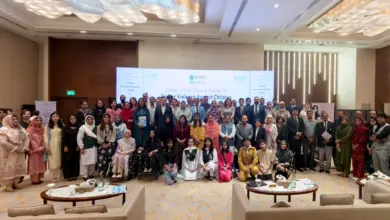
The talk was followed by an interactive question-and-answer session. Members of the diplomatic community, government officials, academics, researchers, students, media representatives and civil-society stakeholders attended the event.