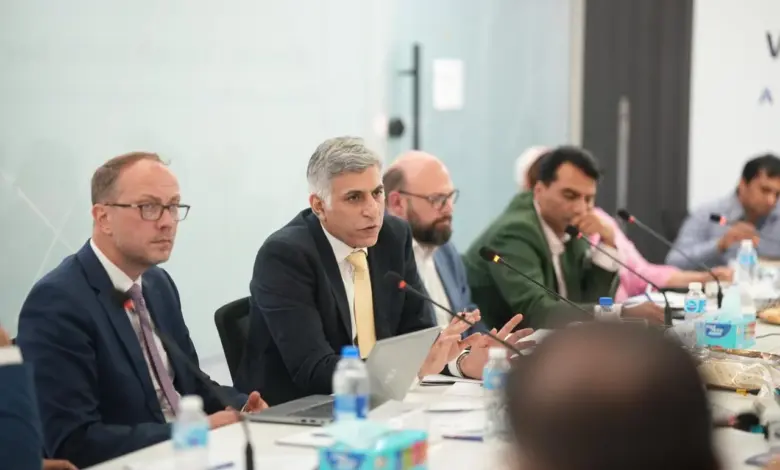
Pakistan must build a stronger link between skills development and labour market demand to help its young population move into decent work, participants said at a high-level roundtable held to mark World Youth Skills Day.
The discussion came as new data showed that 28.4 per cent of young people in the country are outside employment, education or training, while youth unemployment stands at 12.8 per cent.
Pakistan has an estimated 46.3 million people aged between 15 and 24. According to the Pakistan Labour Force Survey 2024–25, 20.6 million young people are part of the labour force, while 2.6 million are unemployed. The youth unemployment rate is almost twice the overall unemployment rate of 7.1 per cent.
Although the share of young people outside employment, education or training has declined from 32.5 per cent in 2020–21, more than one in four youth remain disconnected from education, skills pathways and employment opportunities that can enable them to contribute to the economy.
The International Labour Organization (ILO), the Punjab Skills Development Fund (PSDF) and the British Council convened the roundtable, titled “Skills for a Shared Future”, to consider how Pakistan’s skills system can better prepare young people for emerging employment opportunities in a world of work being reshaped by digitalisation, artificial intelligence, climate change and demographic change.
The Labour Force Survey estimates that 4.9 million young people aged 15 to 24 have received technical or vocational training. This includes 3.0 million young men and 1.9 million young women, underlining both the reach of existing training programmes and the need to widen access, especially for young women, while ensuring that training leads to sustainable employment.
“Pakistan needs a training ecosystem that keeps pace with industry, supports innovation and prepares young people for jobs that are emerging today, not yesterday,” said Geir Tonstol, Director of the ILO Country Office for Pakistan. “Strengthening collaboration between government, industry and development partners is essential to ensure that skills investments translate into higher employability, greater productivity and stronger economic growth.”
Participants called for practical reforms to make the technical and vocational education and training system more inclusive, demand-driven and future-ready. They stressed stronger cooperation between training providers and industry, better use of labour market information, and closer alignment of skills investments with sectors that can generate productive employment.
“Skills development must respond not only to AI, digitalization and the green transition, but also to the structural constraints that affect enterprises and workers alike,” said Ahmed Khan, Chief Executive Officer of the Punjab Skills Development Fund. “Productivity, innovation and decent work must be at the centre of the national skills agenda. When productivity rises, enterprises become more competitive, workers can earn better wages and economies grow more sustainably,” he added.
Ben Lawton, Deputy Director, British Council Pakistan, said the British Council was committed to supporting young people with the skills and confidence needed to succeed in an evolving global landscape.
“By combining essential human skills such as communication, creativity and critical thinking with digital and green competencies, we can help create pathways to employment, innovation and lifelong learning for Pakistan’s youth,” he said.
The roundtable also called for increased investment in lifelong learning so that workers can update their skills throughout their careers as technology and labour market needs change. Participants discussed a national skills passport as a possible mechanism to recognise workers’ existing competencies and improve mobility between employers, sectors and countries.
On the sidelines of the event, PSDF and the ILO signed a Memorandum of Understanding to strengthen cooperation on skills development, labour market research, institutional capacity-building and policy dialogue.
The partnership will support joint efforts to promote future-ready skills, strengthen school-to-work transitions and advance decent work opportunities for women and men in Punjab.