PakistanTech

Pakistan Launches AI-Powered Chatbot to Support Legislative Efficiency

EU-Funded Mustehkam Parlimaan Project Spurs Pakistan’s Digital Legislative Future

ISLAMABAD: In a pioneering step toward modernizing legislative governance, the Senate of Pakistan hosted a high-level session on artificial intelligence (AI) and digital transformation under the EU-funded Mustehkam Parlimaan project. Held at Parliament House, the session titled “Digital Transformation: Strategic Opportunities and Challenges for Lawmakers” brought together Senators, diplomats, AI experts, journalists, and development partners to explore the transformative potential of AI in democratic institutions.

The session was organized by the Office of the Advisor to the Chairman Senate on Special Initiatives and the Parliamentary Development Unit (PDU), as part of a broader €15 million EU-funded effort implemented jointly by GIZ and the Pakistan Institute for Parliamentary Services (PIPS). With over 60 participants, including Senators and parliamentary staff, the event marked a significant milestone in Pakistan’s legislative innovation.

EU Ambassador to Pakistan, H.E. Dr. Riina Kionka, emphasized the European Union’s global leadership in ethical AI regulation. “Artificial Intelligence is already reshaping our societies, but its development must be guided by values. The EU’s comprehensive AI legislation ensures that innovation remains ethical, inclusive, and safe,” she said. Dr. Kionka praised Pakistan’s Senate for embracing this shift and reaffirmed the EU’s commitment to supporting institutional transformation through collaborative, human-centered initiatives.

Advisor to the Chairman Senate, Ms. Rida Qazi, opened the session by underlining the importance of AI literacy for lawmakers. She stressed that the transition from exploration to integration is underway, citing tools like the Senate’s AI-powered Parliamentary ChatBot as examples of enhanced legislative responsiveness. Qazi called upon the private sector to support public institutions in developing AI tools to improve governance and service delivery.

In his welcome remarks, Secretary Senate Syed Hasnain Haider reiterated the Senate’s commitment to modernization and public service excellence. The event included an introductory segment on AI fundamentals, with a demonstration of AI-powered solutions for document automation, workflow optimization, and multilingual accessibility in legislative environments. The session also featured insights on the European Union’s Artificial Intelligence Act, which sets a global precedent for responsible AI governance.

Chairman Senate Syed Yousaf Raza Gilani delivered the keynote address, calling digital transformation a national imperative. “Embracing digital governance and integrating artificial intelligence into legislative work is no longer a question of if, but of how and when,” he stated. Gilani announced the Senate’s commissioning of the region’s first indigenous AI-powered chatbot to support lawmakers by enhancing access to debates, legislative records, and policy data. He emphasized that AI can strengthen democratic processes by promoting transparency, improving public engagement, and countering disinformation.

Chairman Gilani thanked the EU Mission for its longstanding support, including the establishment of Pakistan’s Parliamentary Budget Office. He stressed that ongoing collaboration with global partners and the tech community is vital to ensuring that AI adoption in parliament remains democratic, ethical, and inclusive.

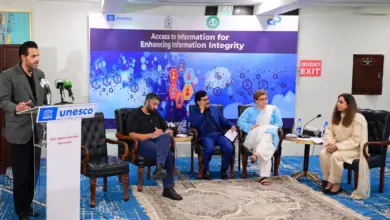
A panel discussion moderated by senior journalist Talat Hussain, with panelists Amir Ghauri and Aisha Nawaz Choudhry, explored AI’s growing role in media, misinformation, and legislative ethics. The panel highlighted both the opportunities and risks associated with AI, stressing the need for frameworks that address transparency, bias, and accountability.

Dr. Basit Riaz Sheikh, a leading AI expert and senior consultant for the Mustehkam Parlimaan project, briefed participants on the evolving applications of AI in legislative environments. He highlighted the need for AI-driven solutions to streamline parliamentary operations and service delivery. Dr. Najeeb Ullah Marwat from the Planning Commission also addressed the audience, emphasizing policy alignment for institutional digital growth.

The session concluded with a shared commitment to fostering innovation within Pakistan’s legislative institutions, ensuring they remain resilient and relevant in the era of digital transformation.

Related Articles

Leave a Reply

Your email address will not be published. Required fields are marked *

Back to top button