Transforming NSU into a World Class Tech University
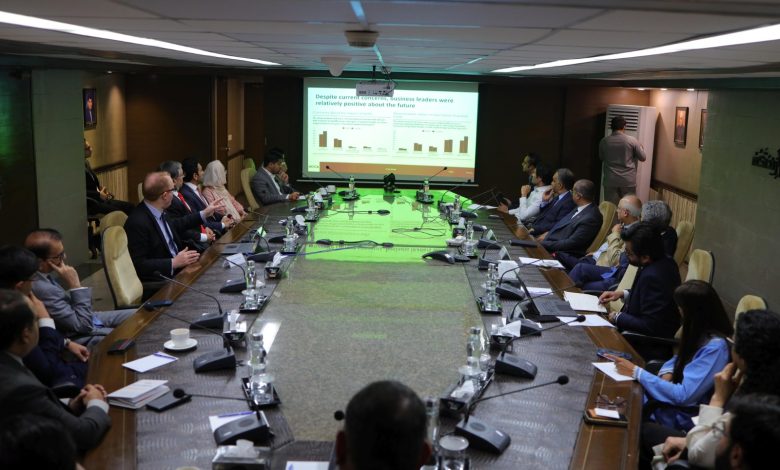
The National Skills University Islamabad has entered a strategic partnership with Shandong Xinxu International Corporation that aims to accelerate NSU transformation through a major capital and technical collaboration. The Letter of Understanding was signed in Islamabad in the presence of Federal Minister for Education and Professional Training Dr Khalid Maqbool Siddiqui, with Ms Tracy Li, CEO of Shandong Xinxu, and Prof. Dr. Muhammad Mukhtar, Founding Vice Chancellor of NSU, representing the partners.
Under the agreement Shandong Xinxu will make an initial investment of USD 30 million to modernize academic infrastructure, laboratories, workshops and training ecosystems to meet international vocational and applied technology standards. As part of the commitment, Xinxu will provide land and commit an initial USD 10 million toward a new National Skills University campus in Karachi to serve Pakistan’s economic hub and export-oriented industries.
The collaboration will adopt applied, competency-based education models inspired by China’s advanced vocational systems, notably the Zibo Polytechnic approach. Curriculum modernization will integrate Industry 4.0 technologies, smart manufacturing, automation, digital construction, renewable energy systems and advanced applied engineering so classroom and workshop outcomes align with industry needs.
To steer implementation, the Parties will form a Joint Steering Committee. Given Xinxu’s capital and operational role, a joint governance framework will govern projects with Xinxu holding a majority strategic interest subject to applicable laws and approvals. National Skills University Islamabad will retain its public-sector status while enhanced executive authority for international programs and joint initiatives will be exercised through Xinxu-nominated leadership in close coordination with NSU’s statutory bodies.
Faculty development is central to the plan: Chinese experts will support training-of-trainers programs, co-teaching arrangements and localization of academic content to enable a gradual transition of academic leadership to Pakistani faculty while raising instructional quality across disciplines. This emphasis on capacity building underpins the longer-term NSU transformation and sustainability of new programs.
Students and young professionals are expected to benefit directly through structured internships, apprenticeships and employment pipelines linked to domestic industry, CPEC Phase-II projects and international labor markets, strengthening employability at home and abroad. The planned Karachi campus is envisioned as a flagship centre for advanced vocational training, applied engineering, maritime and logistics education aligned with port operations, manufacturing clusters and export sectors.
The Federal Ministry of Education and Professional Training will play a catalytic role by providing regulatory facilitation, coordination and strategic support to align the partnership with Pakistan’s TVET reforms, the National Skills Strategy, the NVQF framework and Higher Education Commission guidelines. Prof. Dr. Muhammad Mukhtar described the initiative as a practical step in turning skills into national assets, while the Federal Minister highlighted the deal as a concrete roadmap that combines investment, infrastructure, curriculum reform and faculty capacity building within a public-sector framework.