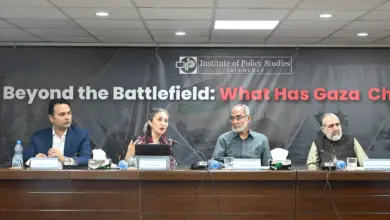
Kashif Chaudhry, president of the Central Traders’ Organization of Pakistan, warned that bakers cannot sell subsidized bread while flour prices have surged and accused mill owners and dealers of profiteering. Speaking at a press conference at the National Press Club in Islamabad with leaders of Rawalpindi’s Central Insaf Bakers Association and the General Bakers Association Islamabad, he issued a 10-day ultimatum for government action and threatened a nationwide shutdown if demands are not met.
Chaudhry said flour prices have jumped sharply, with the cost of two maunds of flour now exceeding Rs9,000 — an increase he estimated at around 70 percent in the past two weeks. He also said the price of a bag of flour has risen by Rs3,000–4,000, making it impossible for bakers to sell bread at government-prescribed rates.
He criticized authorities for imposing price controls and penalties on bakers while failing to regulate mill owners and dealers. “Tandoor operators are fined for breaching set bread prices, but there is no enforcement against mills,” he said, accusing a “mill mafia” and dealers of escaping control. He added that paramilitary forces and magistrates are issuing daily fines as part of a crackdown on the baking community.
Chaudhry demanded that the federal and provincial governments ensure the supply of flour at the official rate, arguing that bakers cannot be expected to sell bread cheaply if they must purchase flour at inflated market rates. He stated that under current conditions, bakeries cannot sell a loaf for less than Rs25.
Giving the government a deadline to resolve the issue, Chaudhry said that if their demands are not accepted within 10 days and bakers continue to face pressure, the community will announce further action, including a possible nationwide shutter-down strike. He emphasized that they do not want to deprive ordinary citizens of bread but argued that selling at government rates is unfeasible unless authorities control the supply chain and enforce the law across mills and dealers.