Govt Pushes Key Bills Through Committees and Assembly in One Day, Sparks Haste Concerns

Govt Pushes Key Bills Through Committees and Assembly in One Day, Sparks Haste Concerns
Nadeem Tanoli
Islamabad: The government moved multiple key pieces of legislation through National Assembly standing committees in rapid succession on the same day and also secured the passage of commerce-related bills in the National Assembly, prompting questions within Parliament over haste, limited consultation, and uneven handling of controversial legislation.
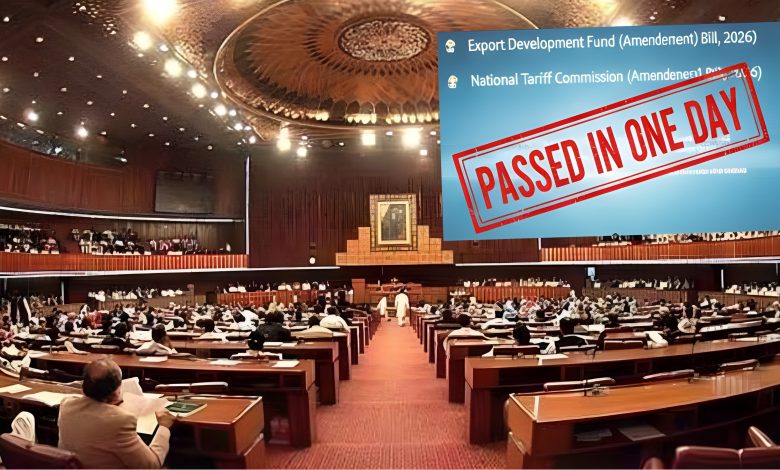
On Monday, the Standing Committee on Commerce cleared two major bills — the Export Development Fund (Amendment) Bill, 2026 and the National Tariff Commission (Amendment) Bill, 2026 — in a single sitting. Both bills were tabled, discussed, amended, and unanimously approved within hours. Parliamentary sources confirmed that the legislation was presented before the National Assembly and passed on the same day.
Members present during the commerce committee meeting included was attended by MNAs, Dr. Mirza Ikhtiar Baig, Ms. Kiran Haider, Mr. Asad Alam Niazi, Mr. Gul Asghar Khan, and Dr. Ramesh Kumar Vankwani in person and Ms. Shaista Pervaiz, Mr. Farhan Chishti, Choudhary Iftikhar Nazir and Mr. Muhammad Numan attended the meeting Virtually. Proposed amendments to the Export Development Fund bill, which were adopted before its approval. No formal objections were recorded at the committee stage, allowing the bills to move forward the same day.
In contrast, the Standing Committee on Information Technology and Telecommunication, meeting on the same day, encountered resistance while considering the Pakistan Telecommunication (Re-organization) (Amendment) Bill. The bill, which includes provisions related to regulatory authority, right-of-way powers, and penalties, did not advance at the same pace.
Pakistan Peoples Party member Dr. Sharmila Faruqui cautioned against rushing the PTA-related amendments, stating that the bill had not yet been reviewed or approved by her party’s parliamentary legislative committee. She warned that moving forward without internal party clearance could create complications when the bill is taken up on the National Assembly floor.
Concerns over the speed and procedure were also raised by Asad Alam Niazi, who questioned why significant legislative proposals were being brought before committees at short notice during an active session. He said members were left with limited time to study the bills or consult their parties, and cautioned that fast-tracking sensitive legislation could weaken parliamentary oversight.
Government representatives defended the accelerated pace by citing external economic and administrative pressures. However, the differing outcomes of the two committee meetings highlighted a growing divide within Parliament. While commerce-related legislation moved from committee approval to National Assembly passage in a single day, the PTA amendment faced political resistance and now risks being deferred to a future session.
Parliamentary observers say the developments have reinforced perceptions that the government is selectively pushing legislation through Parliament at speed, even as coalition partners call for broader consultation on bills carrying wider regulatory and political implications.