**Pakistan and WHO Launch Aggressive Campaign to Prevent Hepatitis C, Targeting Major Reductions in Deaths and New Infections**
The Ministry of Health of Pakistan, in close partnership with the World Health Organization (WHO), has announced a comprehensive plan to intensify efforts against hepatitis C. The initiative—undertaken as part of the Prime Minister’s National Programme for the Elimination of Hepatitis C—aims to prevent 850,000 deaths and more than one million new infections by 2050, while saving billions in healthcare costs over the next five years.
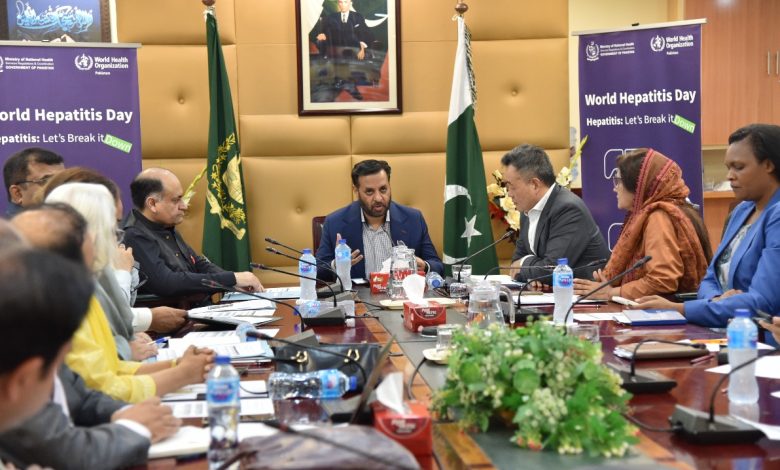
Federal Health Minister Syed Mustafa Kamal, speaking at a high-level event attended by WHO officials, national, and international experts, underscored the urgent need for action. He emphasized that this campaign is not just an event, but a mission to safeguard Pakistan’s future. Stressing the heavy toll already faced by millions and the daily increase in infections, Minister Kamal called upon all stakeholders to unite in this public health effort. He highlighted the government’s strong resolve, stating, “We must act now to save our people.”
Pakistan is among the countries bearing the brunt of the global hepatitis C epidemic, with an estimated 10 million cases—one-fifth of the worldwide total. Each year, over 110,000 people in the country contract hepatitis C, primarily due to unsafe medical injections and injection drug use. Unsafe medical practices account for approximately 62% of new infections, while injection drug use is responsible for about 38%.
Marking World Hepatitis Day, the Ministry of Health and WHO convened experts to discuss both health and economic benefits of prevention. Data presented at the event projected that comprehensive prevention measures could save 150,000 lives, avert 210,000 infections, and prevent 90,000 cases of liver cancer and 71,000 cases of cirrhosis by 2030. The program is also expected to generate significant economic benefits, with estimated savings of 3.3 billion Pakistani rupees through reduced treatment and hospitalization costs over five years. The economic return on investment is projected at $11 for every dollar spent.
Dr. Dapeng Luo, the WHO Representative in Pakistan, drew attention to the ongoing impact of hepatitis, noting the death of one person every 30 seconds from hepatitis-related liver disease or cancer worldwide. He stated, “Detecting and treating hepatitis is essential, but prevention is the key to end the disease.” Dr. Luo reaffirmed WHO’s commitment to supporting Pakistan in implementing science-based strategies adapted to local needs.
The campaign aims to make hepatitis services more accessible by integrating testing, vaccination, safe injection practices, harm reduction, and treatment into national health systems. The Prime Minister’s Programme intends to test at least half of the eligible population—approximately 82.5 million people aged 12 and above—and provide treatment to five million people by 2027.
With its record-high hepatitis C burden, Pakistan’s efforts are crucial if the world is to achieve the WHO’s goal of eliminating hepatitis as a public health threat by 2030. WHO has reiterated its unwavering support for Pakistan’s national campaign and called for intensified action from policymakers and health authorities to break the chain of transmission and deliver life-saving interventions at scale.