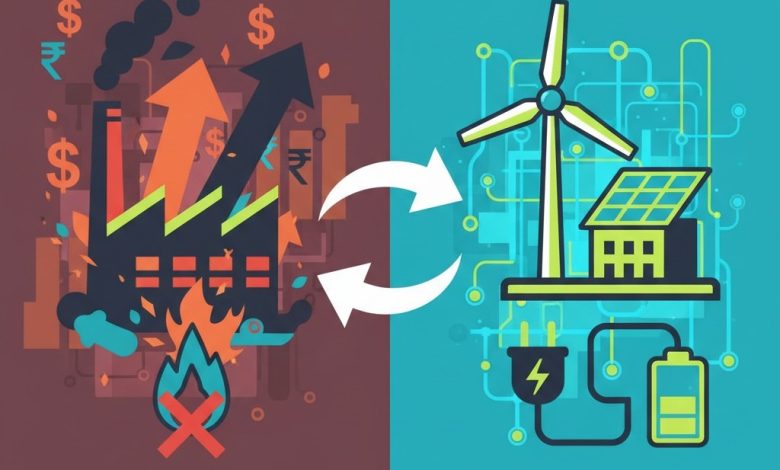
Experts at a Sustainable Development Policy Institute webinar urged a gradual shift from gas to electricity and renewable energy to protect long-term industrial competitiveness as Pakistan faces mounting global energy price pressures and domestic policy constraints. The discussion emphasized industrial electrification as central to reducing exposure to volatile fuel markets and lowering production costs over time.
SDPI Deputy Executive Director Dr Sajid Amin Javed warned of persistent oil price uncertainty, outlining three likely trajectories: a 50% probability of prices rising to USD 130–150 per barrel in the near term, a 10–20% chance they remain at that level for six to eight months, and a 30–40% likelihood of stabilizing around USD 110–120 per barrel, with USD 110 as the expected average. He said such scenarios could translate into 10–12% inflation for Pakistan, an import bill increase of roughly USD 6 billion, and a slowdown in GDP growth to 2.5–2.8%, while prolonged LNG disruptions would add pressure on energy-intensive industries.
Engr. Ubaid ur Rehman Zia described three waves of impact: an initial structural sickness as higher energy costs and IMF-mandated reforms disrupted industries reliant on self-generation and shifted energy use toward non-productive avenues; a so-called relief that wasn’t, where a February 2026 tariff cut of nearly Rs 4 per unit was largely offset by a Fuel Charges Adjustment of Rs 1.78 and a Rs 1,243 per MMBtu levy on off-grid captive power, provoking formal protests from textile exporters; and an ongoing geopolitical shockwave illustrated by WTI crude swinging from roughly USD 75 to USD 110 before settling near USD 84–90. He called for urgent policy reforms, accelerated industrial electrification, and scaled renewable adoption.
Ms Saleha Qureshi of SDPI noted that LNG prices have surged to USD 15.77 per MMBtu and highlighted Pakistan’s heavy dependence on imports, with about 80% of liquid fuels and roughly 20% of the power mix imported. She said the recent petrol hike of around Rs 55 per litre has driven logistics costs up by about 12%, creating a triple shock for industry from electricity tariffs, gas prices, and feedstock costs that further undermines competitiveness.
Global market strategist Syed Mohammed Osama Rizvi pointed to structural weaknesses in Pakistan’s refining sector, where many refineries still use hydro-skimming technology that yields furnace oil instead of high-demand fuels like high-speed diesel. The mismatch leaves the economy importing 40–45% of refined products and increases vulnerability to international market swings.
Former Pakistan Textile Council CEO Sheikh Mohammed Iqbal warned that rising energy costs combined with tax pressure threaten textile competitiveness against regional peers such as Bangladesh and Sri Lanka. He said electricity must become cheaper and more predictable through tariff rationalization, reduced inefficiencies, grid upgrades for reliability, and faster deployment of renewables, energy storage, and electric vehicle infrastructure to lower long-term costs, support jobs, and boost industrial and transport sector competitiveness.
Muhammad Abdul Rafay of Alternate Law Collective argued that industries cannot be forced to choose between an unreliable grid and expensive captive power. He stressed the need for long-term planning rather than short-term cost shifting, calling for a flexible, investable grid, transparent pricing, and rules that enable efficient load management and renewable integration. He also highlighted a misalignment between national electricity reforms and the IMF Extended Fund Facility, creating policy uncertainty for investors and industry.
Manzoor Ahmed Alizai from PRIED proposed a two-track approach combining rationalization of industrial tariffs with accelerated renewable integration, backed by a strengthened grid and market rules that ensure reliable access to competitively priced electricity. He urged robust demand forecasting, clear electrification targets, and credible planning so investments in generation, transmission, and grid flexibility are made ahead of demand. Throughout the discussion experts reiterated that industrial electrification is essential for Pakistan to stabilize costs, protect jobs, and rebuild export competitiveness.