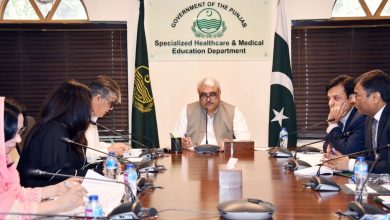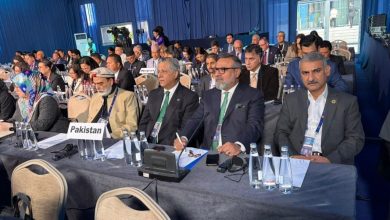
Islamabad — Federal Secretary Muhammad Aslam Ghauri on Tuesday urged urgent action to strengthen Pakistan’s One Health system, warning that future pandemics cannot be averted without coordinated work across human, animal and environmental sectors.
Speaking at the inaugural session of a two-day national training on pandemic preparedness held at the COMSTECH Secretariat and organized by the Health Services Academy, he stressed the need to move beyond fragmented responses and invest in integrated surveillance systems, workforce development and stronger institutional coordination.
“Pandemic preparedness is no longer a sectoral responsibility—it is a national priority requiring sustained collaboration,” Mr Ghauri said, underscoring that integrated planning is essential to reduce response delays and improve early detection capabilities under the One Health framework.
Vice Chancellor of the Health Services Academy, Prof. Dr. Shahzad Ali Khan, urged reinforcement of institutional capacity and adoption of evidence-based approaches to address emerging public health threats more effectively across Pakistan.
Providing a strategic overview, Prof. Dr. Tariq Mahmood Ali, National Coordinator of the One Health Workforce Development and Coordination Project, described the initiative as a transformational step toward national health security. He warned that climate change, rapid urbanization and growing human-animal interaction are increasing Pakistan’s vulnerability to infectious disease emergence and stressed that nearly 75 percent of emerging infectious diseases originate from animals.
Dr. Muhammad Asif Sahibzada, Director General (Environment/Climate Change), highlighted how environmental degradation, poor waste management and climate variability are reshaping disease patterns, and called for stronger environmental monitoring to be integrated into public health planning consistent with One Health goals.
Dr. S.M. Mursalin, Chief Executive Officer of the Pakistan One Health Alliance, emphasised systems thinking and cross-sector collaboration, noting that siloed approaches have historically delayed outbreak responses and that coordinated field-ready systems are essential.
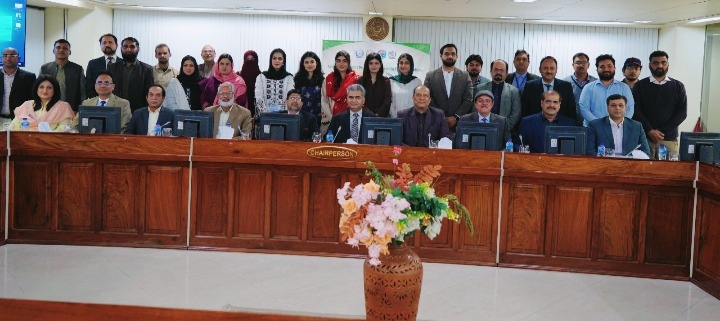
The two-day training brought together professionals from health and environmental sectors and focused on zoonotic diseases, vector ecology, climate-resilient health systems, surveillance, epidemic intelligence and risk communication. Officials said the programme combines technical sessions, group work and assessments to develop a cadre of trained professionals and trainers who can support nationwide implementation of the One Health approach.
The workshop concludes on April 8 with the distribution of certificates to participants, marking a step toward strengthening Pakistan’s preparedness and response capacity under the One Health framework.