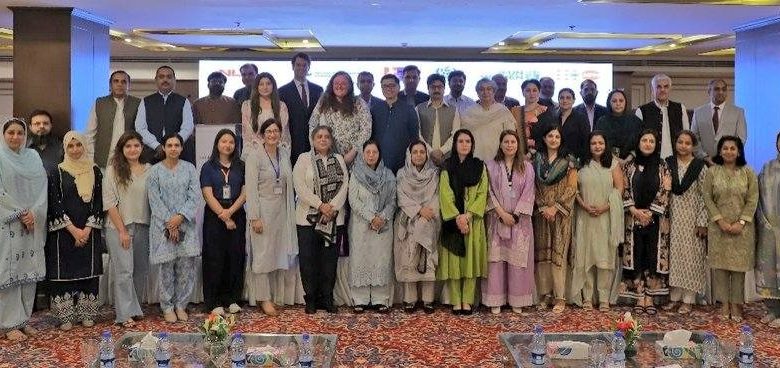
The National Commission on the Status of Women in Islamabad, together with UN Women Pakistan, UNFPA Pakistan, the Embassy of the Netherlands and Group Development Pakistan, concluded the first day of a two-day national consultation on the National Gender Parity Report. Participants from federal and provincial governments, Gilgit-Baltistan and Azad Jammu and Kashmir discussed gaps in gender data, agreed on the need for harmonized indicators and vowed to build a robust mechanism to ensure Pakistan’s progress is accurately reflected in global reporting.
The session opened with a detailed presentation by Ume-Laila Azhar, chairperson of the NCSW, who compared federal and provincial frameworks and highlighted discrepancies in the indicators used across jurisdictions. She warned that inconsistent indicators produce an incomplete picture for international audiences, effectively rendering Pakistan’s gains invisible in global assessments.
Khawar Mumtaz, former chairperson of the NCSW and longtime women’s rights advocate, argued that unsynchronized data systems are silencing the lived realities of women. She called for clear institutional ownership of gender data processes so that collection and reporting become routine and accountable.
Amir Jahangir, CEO of Mishal Pakistan and a data provider to the World Economic Forum, stressed that the lack of timely and comparable data has contributed to Pakistan’s poor placement in global rankings. He emphasized that improving the timeliness and quality of data is essential to changing that perception.
Dr. Aliya Hashmi Khan, a leading academic and gender expert, urged the development of harmonized mechanisms to track progress consistently over time. Several other participants, including Laura Sheridan of UNFPA, Jamshed Kazi of UN Women, Alexander Akerboom of the Embassy of the Netherlands, and Humaira Zia Mufti, secretary of the NCSW, reinforced the need to align Pakistan’s data systems with international best practices so the country’s true story on women’s empowerment is recognized globally.
A clear consensus emerged during plenary discussions and breakout groups: gender data must be systematically organized; indicators should be standardized and harmonized across federal and provincial frameworks; and data must be published and presented in the right forums and on time to ensure Pakistan’s achievements are captured in international reports.
With focal persons and representatives from all provinces, Gilgit-Baltistan and Azad Jammu and Kashmir in attendance, the first day closed on a note of commitment to develop a robust, coordinated mechanism to prevent future misrepresentation of Pakistan’s gender data. The second day will focus on technical discussions and concrete steps forward with experts and provincial focal persons.