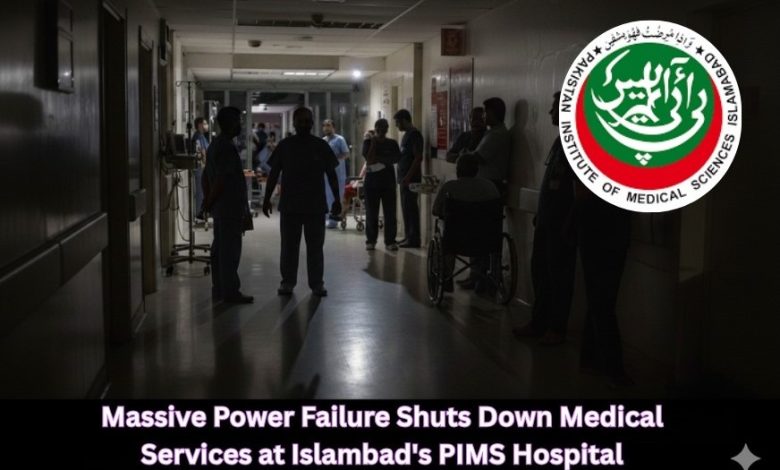
A massive power breakdown at the Pakistan Institute of Medical Sciences left Islamabad’s largest public hospital largely non functional, forcing staff to suspend lifesaving services and sending patients and attendants into panic. The PIMS power outage affected wards, operating theatres and diagnostic units, leaving many areas without electricity, water or ventilation for hours.
Hospital officials said the disruption resulted from a major fault in the external electricity supply, forcing reliance on limited backup generators. Only the Emergency Department remained partially operational while radiology, intensive care and many surgical units were plunged into darkness. The absence of timely updates from the power supplier compounded anxiety for families awaiting news on critically ill relatives.
Doctors were compelled to cancel dozens of surgeries and procedures as CT scanners, MRI machines, dialysis units and X ray systems went offline. Patients who required urgent imaging, dialysis or operative care were redirected to private hospitals, adding a significant financial burden to families already under stress.
Attendants described stifling heat in wards because of the lack of cooling and dangerous, pitch dark corridors that made moving elderly and bed ridden patients hazardous. Healthcare workers warned that the outage put vulnerable patients at risk by compromising oxygen supplies, monitors and other critical systems.
Senior staff said the administration spent hours coordinating with the electricity corporation but the hospital remained largely non functional for most of the day. Officials privately acknowledged that contingency arrangements at PIMS are inadequate and that the facility remains dependent on an increasingly unreliable power grid.
The incident follows repeated breakdowns at PIMS in recent years and comes despite government commitments to solarize major hospitals in Islamabad. Medical professionals, civil society members and patient rights advocates renewed calls for systemic upgrades, stronger backup systems and urgent infrastructural modernisation to ensure patient safety and accountability.