The Council of Palm Oil Producing Countries completed a mission to Karachi that reaffirmed Pakistan’s strategic role in Asia’s palm oil market and advanced discussions on trade resilience and food security. The delegation met senior government officials, industry leaders and diplomatic representatives to examine market dynamics, supply-chain reliability and regional edible oil trends.
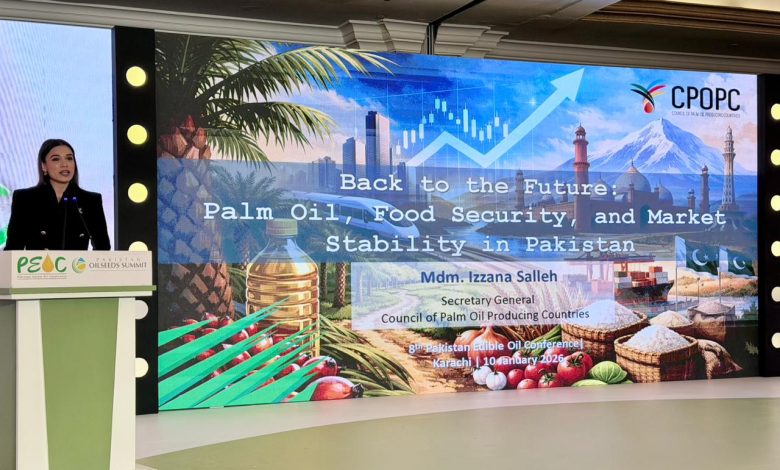
At the 8th Pakistan Edible Oils Conference the CPOPC Secretary General Izzana Salleh highlighted Pakistan’s significance as a buyer and stabiliser, noting that Pakistan consumes about 4.3% of global palm oil and imports roughly 3.3 million tonnes annually. She underscored that Asia’s import footprint is concentrated in India (18%), China (11%) and Pakistan (9%), together accounting for nearly 40% of global edible oil imports and surpassing traditional markets.
Delegates emphasised palm oil’s central role in Pakistan’s food system, supplying over 50% of edible oil needs and representing 70–75% of total consumption, especially in ghee and cooking oil. As the most affordable edible oil, palm oil supports households and small and medium enterprises in a price-sensitive economy where SMEs contribute around 40% of GDP and 25% of exports, making reliable supplies essential to national food security.
On sustainability the Secretary General urged a shift from mere compliance to active contribution, promoting inclusive approaches that support food security, respect national standards and assist smallholders. With certified sustainable palm oil now exceeding 20% of global supply, delegates stressed the importance of avoiding new trade frictions while advancing sustainability goals through cooperation, transparency and technical support.
Pakistan’s five-decade partnership with producing countries was highlighted as a model for balancing affordability, stability and sustainability. The Karachi mission reinforced commitments to deepen cooperation on resilient supply chains, responsible sourcing and policy dialogue that protect consumers and business interests across the region.