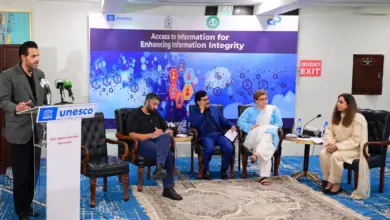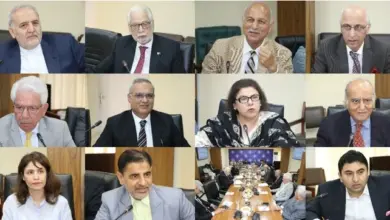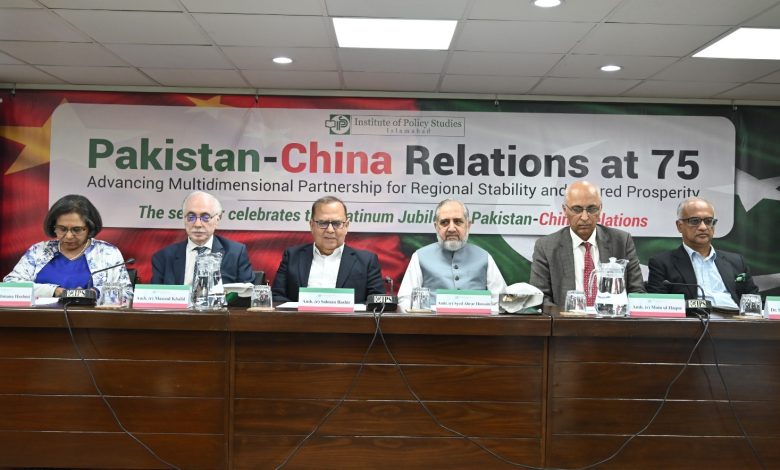
Speakers at an Institute of Policy Studies seminar in Islamabad urged a deliberate policy shift to convert Pakistan China relations from dependence into productive interdependence, positioning the partnership as a driver of socio-economic transformation and regional stability.
Ambassador Syed Abrar Hussain recalled the evolution of ties since bilateral recognition in May 1951, noting that cooperation has deepened under successive phases of the China Pakistan Economic Corridor. He highlighted that the expanding engagement under CPEC offers a foundation for long-term growth if Islamabad prioritises governance, human capital and professional institutions.
Ambassador Masood Khalid emphasised that the relationship rests on mutual trust, non-interference and shared interests, rejecting any narrative that frames the bond as a stance against third countries. He described China as an emerging stabilising actor and called on Pakistan to treat CPEC as the central pillar of its geoeconomic future that can help lift the economy over the coming decade.
Ambassador Naghmana Hashmi urged reorienting CPEC towards industrialisation and special economic zones while deepening cooperation in artificial intelligence and green technologies. She proposed harnessing rare earth resources, operationalising the ML-1 rail project to boost connectivity, and exploiting Gwadar port’s geostrategic advantage amid shifting regional dynamics.
Speakers also warned that persistent trade deficits carry national security implications and recommended improved project implementation frameworks, greater domestic expertise, and expanded people-to-people exchanges. They advised diversifying diplomatic and economic ties without undermining the core Pakistan China relations that have historically supported Pakistan’s interests.
Ambassador Moin ul Haque pointed to China’s development model — state-led reforms, openness to investment, provincial empowerment and investments in education and technology — as lessons Pakistan can adapt. He noted that societal values underpinning China’s rise, such as merit and discipline, complement economic policy choices.
Dr Syed Muhammad Ali underlined China’s role in strengthening Pakistan’s national power and regional balance, citing technological defence cooperation that has supported indigenous capability. He highlighted the operational effectiveness of modern Chinese defence systems during the May 2025 India-Pakistan stand-off and stressed the importance of Chinese-assisted civilian nuclear projects to address Pakistan’s energy shortfalls.
Chairing the session, Ambassador Salman Bashir reflected that Pakistan China relations transcend transactional approaches and are grounded in long-term civilisational ties and mutual understanding. Across the discussion, experts called for a strategic recalibration that leverages Pakistan China relations to accelerate industrialisation, adopt advanced technologies and bolster regional prosperity.