Islamabad records first robotic gallbladder operation via telesurgery

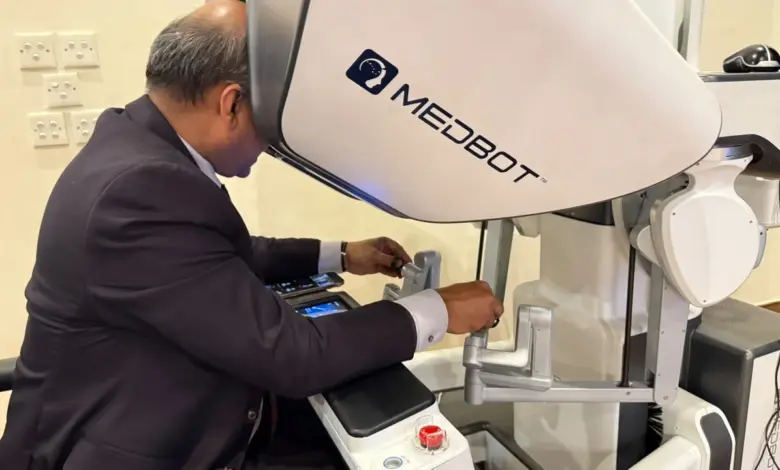
ISLAMABAD, Oct 30: Islamabad has recorded its first robotic cholecystectomy performed through telesurgery, marking an important step in the application of robotic systems and real-time connectivity in the healthcare sector.
The procedure was conducted with the surgeon operating from the International Conference on Future of Healthcare (FHCC 2026), held at the Gandhara Heritage and Culture Centre, while the patient underwent surgery at Kulsum International Hospital.
Prof. Dr. Syed Tanseer Asghar, Registrar of Shaheed Zulfiqar Ali Bhutto Medical University (SZABMU) and a robotic surgeon, controlled the robotic surgical console from the conference venue. A surgical team remained present with the patient at Kulsum International Hospital throughout the procedure.
Dr. Sana Sharafat Ali, consultant robotic and vascular surgeon, served as the patient-side robotic surgeon at the hospital. She handled the robotic patient cart, provided surgical support on site and remained in coordination with Prof. Asghar during the operation.
The surgery linked teams at two separate locations through a robotic platform and real-time communication. The procedure showed how a remote console can be operated in coordination with clinicians present at the patient’s side, while also underlining the importance of teamwork, patient-side support and clinical coordination in telesurgery.
SZABMU Vice Chancellor Prof. Dr. Tanwir Khaliq, who is also a surgeon, described the development as a reflection of the university’s commitment to building expertise in advanced medical technologies.
“Today’s procedure is an important step for SZABMU and for the wider healthcare community. It shows how robotic technology, reliable connectivity and close coordination between surgical teams can expand the possibilities for specialist care. As we develop these capabilities, patient safety, professional training and responsible use of technology must remain central,” Prof. Khaliq said.
He said the university had also obtained approval for its first Robotic and Artificial Intelligence Health Centre. The proposed centre is aimed at supporting the development of robotic and AI applications in healthcare, along with training and institutional capacity-building.
The achievement was presented at FHCC 2026 as a practical demonstration of telesurgery before a healthcare audience. It also points to the growing role of Pakistani surgeons in adopting and advancing sophisticated medical technologies.
Telesurgery may, over time, help connect specialist expertise with patients in areas where access to particular surgical skills is limited. However, its wider use will depend on dependable technology, appropriate clinical protocols and close coordination between remote surgeons and teams present in the operating room.
The joint effort by Prof. Asghar and Dr. Sana Sharafat Ali has been described as a notable milestone in Pakistan’s robotic surgery landscape and a step forward in the conversation on digitally connected surgical care.