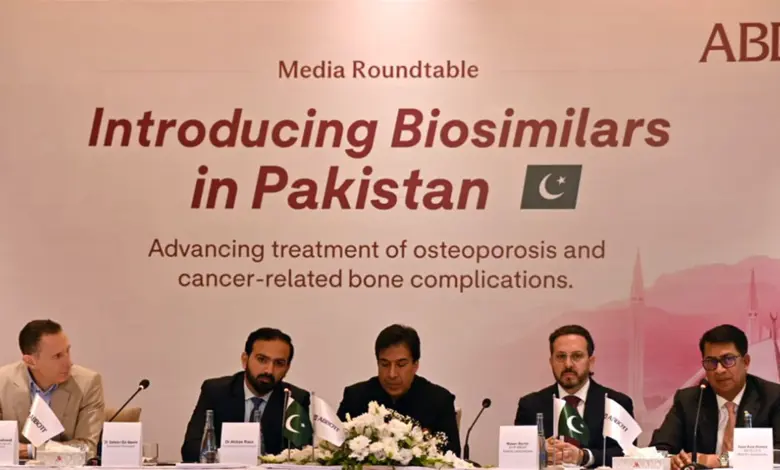
ISLAMABAD: Abbott, the global healthcare company, has received product registration from the Drug Regulatory Authority of Pakistan (DRAP) for 60mg and 120mg denosumab biosimilars, a development aimed at widening access to advanced biologic treatment for osteoporosis and cancer-induced skeletal-related events in the country.
The biosimilars, to be marketed by Abbott in Pakistan, are expected to make high-quality biologic therapy more affordable and accessible for patients affected by these conditions. The 60mg denosumab biosimilar is intended for people living with osteoporosis, while the 120mg option is for patients facing cancer-induced skeletal-related events.
“For people living with osteoporosis, access to the 60mg denosumab biosimilar can be very meaningful. The same applies to the 120mg denosumab biosimilar for people living with cancer induced skeletal-related events,” said Mazen Bachir, Division Vice President of Abbott’s medicines business in the Middle East, Africa and Pakistan.
“By making advanced and high-quality therapies more accessible, Abbott will continue to positively impact the lives of patients and contribute to strengthening healthcare outcomes across Pakistan,” he added.
According to the Journal of the Pakistan Medical Association, nearly 10 million people in Pakistan are estimated to have osteoporosis, including around 7.2 million women. As the country’s population ages, the number of people vulnerable to osteoporosis and fragility fractures is expected to rise substantially.
A study conducted in Islamabad and Rawalpindi found osteoporosis in 56 percent of postmenopausal women assessed through dual-energy X-ray absorptiometry (DEXA), a scan used to measure bone density and detect osteoporosis. The findings point to the growing burden of the disease in Pakistan.
Fragility fractures, particularly hip and vertebral fractures, are linked with disability, higher healthcare costs, loss of independence and mortality among older adults. Osteoporosis is also among the leading causes of mortality in the elderly and particularly affects postmenopausal women.
A Phase III SIMBA study published in Pharmaceutics in 2026 confirmed that MB09, the biosimilar marketed by Abbott in Pakistan, showed clinical similarity to the reference biologic, with comparable efficacy and safety. The study found that it offered equivalent protection against bone mass loss in postmenopausal women.
Abbott said it would provide denosumab as part of its wider plan to expand access to high-quality medicines in selected therapeutic areas, including oncology, immunology and women’s health, through relevant partnerships with biotechnology companies.
In Pakistan, this approach includes the introduction of biosimilars in oncology, an area where unmet healthcare needs remain substantial. Given the high burden of cancer in the country, these medicines, many of which are recognised as first-line therapies for multiple cancer types, are expected to support improved access to quality treatment.
“Maintaining bone health is essential to preserving independence and quality of life,” said Professor Syed Abbas Raza, Endocrinologist and Past President of the International Society of Endocrinology. “The introduction of quality therapies gives more treatment options to those who need them most.”
The denosumab biosimilars were developed and manufactured by mAbxience, which is also responsible for the Phase III SIMBA study. The products are part of a strategic collaboration agreement signed between mAbxience and Abbott in 2023, under which mAbxience develops, manufactures and supplies the biosimilars.
Abbott has had a presence in Pakistan for nearly 80 years and a history of more than 135 years globally. The company said the introduction of the new denosumab options is aimed at expanding access to quality treatments and reinforcing its efforts to address chronic diseases in Pakistan.
Abbott’s portfolio spans diagnostics, medical devices, nutritionals and branded generic medicines. The company has 122,000 colleagues serving people in more than 160 countries.