NIRM Case Uncovers ‘Systemic Failure’ in Health Ministry as Parliament Slams Illegal Suspension and Chaotic Transfers

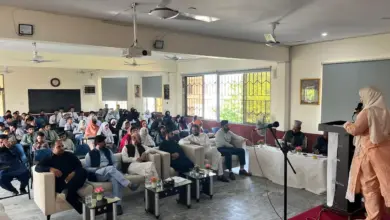
Islamabad (Nadeem Tanoli) A parliamentary sub-committee investigation has revealed a stunning pattern of administrative breakdown, procedural violations, and prolonged inaction by Pakistan’s health authorities in the case of Dr. Mazhar Hussain, Deputy Director of the National Institute of Rehabilitation Medicine (NIRM). The findings, presented during a National Assembly Sub Committee hearing, have sparked widespread concern over systemic dysfunction within the Ministry of Health.
The committee, convened to investigate longstanding complaints against Dr. Hussain, was presented with detailed testimony indicating that his 2020 suspension grossly violated the law. Dr. Hussain told the panel he was suspended for seven and a half months—more than double the maximum three-month period allowed under civil service rules. “The rule is that you cannot suspend for more than three months, but I was suspended for seven and a half months without any reason,” he stated.
“This Is Not Compassion — It’s Business”: Lawmakers Expose Shifa Hospital’s Practices in Heart-Wrenching Personal Testimonies
Sub-committee convener Dr. Shazia Sobia Aslam Soomro pressed for a copy of the original suspension order to verify whether a legal justification had been cited at all. Her request reflected the committee’s broader concern with the legality of actions taken throughout the dispute.
The hearing laid bare a series of rapid-fire, disjointed transfers that members described as an “administrative merry-go-round.” After his prolonged suspension, Dr. Hussain was returned to NIRM but stripped of his prior administrative role and reassigned to the ENT department. Within three months, he was sent back to the Ministry on deputation, only to be repatriated and sent to Polyclinic Hospital—where he was shuffled from emergency duties to an administrative post—before finally being promoted and returned to NIRM in October 2023. This cycle of placements, seemingly without purpose or resolution, was criticized by committee members as a sign of institutional dysfunction.
Perhaps most damning was the universal acknowledgment that, despite years of internal complaints and political escalations, a fair and impartial inquiry into the matter had never taken place. “The issue was always raised in the Standing Committee, but the matter was always left incomplete, without any investigation,” said Dr. Soomro. Her statement was echoed by fellow members who criticized previous proceedings as “one-sided” and devoid of transparency.
Health Ministry officials did not dispute these claims. In a rare admission, a official conceded that the ministry had failed to follow due process. The committee also heard that, in past meetings, one parliamentarian would bring a file of complaints against Dr. Hussain but refuse to submit it as a formal record—removing it from the meeting afterward—further undermining the legitimacy of the proceedings.
The sub-committee concluded that the failure to conduct a formal, evidence-based investigation was the root cause of the administrative chaos that followed. Members have now demanded all official documentation—suspension orders, transfer notifications, and internal correspondence—to build a clear and verifiable timeline of events.
The NIRM case has emerged as a critical test of whether institutional accountability can be restored in Pakistan’s public health sector. The sub-committee’s current efforts mark the first serious attempt to untangle years of procedural neglect and politically driven decision-making that have paralyzed one of the capital’s most important healthcare institutions.