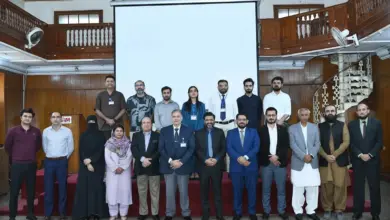
Doctors Sound Alarm Over Widespread Vitamin D Deficiency in Pakistan


LAHORE: Medical experts have warned that vitamin D deficiency has become a major public health challenge in Pakistan, affecting people of different age groups despite the country’s abundant sunshine.
Speaking at the D Connect Summit 2026, held in connection with World Vitamin D Day at Avari Hotel on Mall Road, Lahore, experts called for stronger public awareness, timely diagnosis and appropriate treatment to deal with the growing problem.
The seminar was organised by Scotmann Pharmaceuticals and brought together medical professionals who discussed the impact of vitamin D deficiency on bone health, women’s health and overall well-being.
Prof Dr Faisal Masood, Professor and Head of the Department of Orthopaedics at Mayo Hospital, Lahore, spoke on “From Childhood to Aging: Vitamin D – A Lifetime Partner in Bone Health.”
He said bones carried out several vital functions in the body, including supporting movement, protecting important organs and helping maintain calcium balance. He said calcium was essential for the proper functioning of the heart, muscles and nerves, while vitamin D enabled the body to absorb and use calcium effectively.
Dr Faisal said Pakistan was facing a serious vitamin D deficiency problem even though sunlight was available in abundance. Citing estimates, he said around 73 per cent of people were either deficient in vitamin D or had inadequate levels.
He said several factors were contributing to the problem. Many people avoided direct sunlight due to concerns over skin tanning and harsh weather conditions. Clothing practices, social customs, indoor lifestyles and air pollution also reduced exposure to sunlight.
He added that changing dietary habits had worsened the situation, as people were increasingly choosing food for taste rather than nutritional value.
The orthopaedic specialist warned that vitamin D deficiency could have serious implications for bone health, especially among elderly people. He said osteoporosis often remained undiagnosed until a person suffered a fracture after a minor fall.
Referring to the clinical example of an elderly woman who sustained a fracture after falling at home, he said old age, lack of physical activity, steroid use and other health conditions could increase the risk of weak bones.
Dr Faisal stressed that bone health should be protected from childhood instead of being addressed only in old age. He said nearly 90 per cent of peak bone mass was achieved during younger years, making it important for children to take part in outdoor activities and consume nutritious food for stronger bones.
He also said vitamin D had a role beyond bone health, contributing to several body processes, including brain development, immunity and the proper use of calcium.
He urged parents to focus on children’s nutrition and physical activity, saying a healthy lifestyle in early life could reduce the risk of fractures and bone-related diseases later.
Prof Dr Asma Kazi, Professor and Head of Medicine at Rashid Latif Medical College, Lahore, spoke on “Mapping the Burden, Mastering the Management: Pakistan’s Vitamin D Crisis and PSIM Guidelines.”
She said vitamin D deficiency was a major public health concern in Pakistan, but also cautioned against the growing trend of excessive supplementation without proper medical advice.
Dr Asma said vitamin D was among the most frequently prescribed supplements in medical practice. However, she said doctors needed to consider three key questions: who should be tested, who actually required supplementation and what dose should be prescribed.
She referred to various studies showing a high prevalence of vitamin D deficiency in Pakistan. According to figures she cited, one study reported a deficiency rate of 84.3 per cent, while a retrospective laboratory-based assessment found the rate to be 61.1 per cent.
She also mentioned findings showing that 79.7 per cent of women of reproductive age had vitamin D deficiency, with 54 per cent moderately deficient and 25.7 per cent severely deficient.
According to the data presented by her, vitamin D deficiency was also found among children and adults in both urban and rural areas. Studies carried out in different Pakistani cities reported deficiency rates ranging from 74 per cent to 95.1 per cent.
Dr Asma said air pollution, limited sunlight exposure, clothing practices, skin pigmentation and lack of vitamin D-rich food were among the main causes of the deficiency.
She identified children, adolescents, pregnant and breastfeeding women, elderly people and individuals with obesity, kidney disease, liver disorders and conditions affecting nutrient absorption as groups needing special attention.
She emphasised that vitamin D supplementation should be based on a patient’s medical condition, age and individual requirements. She said doctors should review medical history, assess risk factors and conduct relevant tests before prescribing high doses.
She warned that excessive intake of vitamin D could have harmful effects. Routine high-dose supplementation, she said, was not suitable for everyone and treatment should follow medical guidelines.
Dr Asma added that vitamin D requirements varied with age. In some cases, daily requirements could be met through diet and sunlight, but supplements might be needed where these sources were insufficient, deficiency was confirmed or a person belonged to a high-risk group.
At the summit, Dr Andleeb Arshad, Assistant Professor at Lahore General Hospital, also spoke about women’s health and the importance of vitamin D.