ISLAMABAD: Federal Minister for Climate Change and Environmental Coordination Dr Musadik Malik has urged faster, practical and community-led action to address problems faced by Pakistan’s climate-vulnerable cities and poor communities.
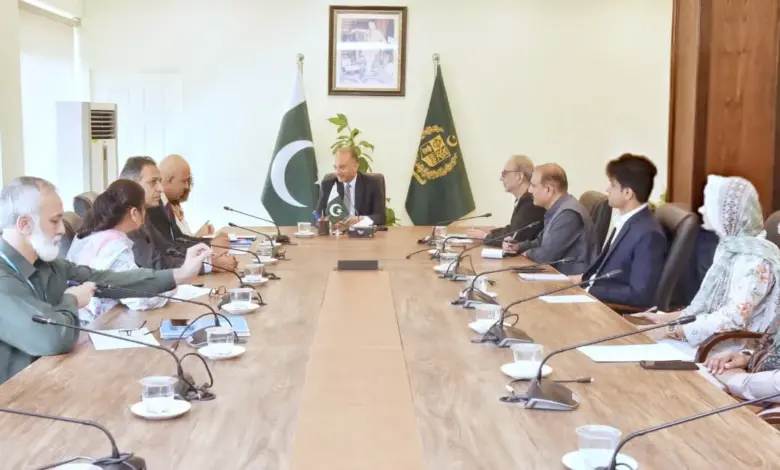
He expressed these views during a meeting with Ms Oddy Angelo, a UN-Habitat officer from Bolivia. The meeting discussed urban development, climate resilience, water and sanitation, flood management and interventions for vulnerable communities.
Dr Malik voiced concern over delays in development projects and said policy work and international cooperation must result in visible action on the ground.
“We need impactful work. Bring effective policy input, we will collaborate and get it done,” he said, calling on all stakeholders to cut unnecessary delays and concentrate on implementation.
The minister said Pakistan required practical solutions instead of more development jargon, especially for communities facing contaminated water, flooding, poor sanitation and inadequate urban infrastructure.
“One project can change the lives of many,” he said, stressing the need for community-based and self-sustaining initiatives that could be replicated across the country.
Dr Malik observed that various institutions and development partners had already carried out considerable good work, but much of it remained scattered and its impact had not been adequately demonstrated. He said the focus should be on identifying successful interventions, showing their results and expanding them into initiatives that could ultimately become part of a national agenda.
He highlighted the need for practical measures, including water treatment plants in areas affected by contaminated water, flood-resilience projects and other basic urban services in vulnerable communities.
The minister also called for fast-tracking the National Urban Strategy from the policy stage to implementation. He said stronger coordination was needed among government institutions, UN agencies, development partners, local authorities and communities.
Dr Malik also proposed a business and innovation ideas competition for Pakistan’s youth, inviting solutions in fields such as climate change, public safety, vulnerable cities, flood management, technology, invention, water and sanitation and green industry.
He said young people in Pakistan should be provided an opportunity to convert creative ideas into practical solutions for national challenges.
The meeting underlined that development resources must reach communities and local populations should have a meaningful role in designing and sustaining projects.
Dr Malik said Pakistan did not lack ideas or talent. What was needed, he added, was to move faster from ideas to implementation, from isolated projects to scalable models and from policy discussions to solutions that improve people’s lives.
He reiterated that the measure of development should be simple: less delay, more delivery and tangible improvement for vulnerable communities.