A Regulator in Name Only: Committee Exposes Deep Rot in IHRA
No Hospitals Licensed in Islamabad: Committee Uncovers Regulatory Collapse

A Regulator in Name Only: Committee Exposes Deep Rot in IHRA
Nadeem Tanoli
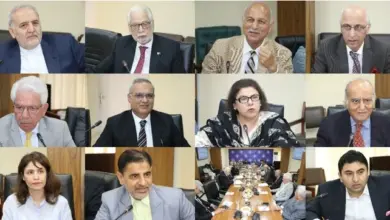
Islamabad: The Sub-Committee on National Health Services, chaired by Dr. Amjad Ali Khan, delivered a scathing assessment of the Islamabad Healthcare Regulatory Authority (IHRA) during a recent session, describing it as a non-functional body that has failed in its core responsibility to safeguard public health. The meeting revealed deep institutional decay, rampant conflicts of interest, and a shocking absence of oversight that has allowed private healthcare providers in Islamabad to operate without consequence for years.
Court Questions IHRA Hiring Practices Over Missing Service Rules
The committee was alarmed to learn that not a single hospital, clinic, or laboratory in Islamabad holds a valid license, despite licensing being a mandatory legal requirement under the IHRA Act of 2018. These establishments are only “registered,” a preliminary step that falls far short of the law’s stipulations. The committee traced this failure to the complete paralysis of the authority’s internal mechanisms. The Inspection Committee, which must be established to evaluate facilities before a license can be issued, has never been formed. The Registration Board, despite being constituted in February 2024, has convened only once.
A major concern voiced by lawmakers was the conflicted composition of IHRA’s board. Several board members were found to hold positions that directly link them to the private healthcare or medical education sectors they are meant to regulate. These dual roles, according to the committee, make independent oversight impossible. The presence of such individuals was condemned as a breach of regulatory ethics, violating the spirit—if not the explicit letter—of the law. Although the IHRA Act of 2018 lacks a clear disqualification clause, Rule 13 of the IHRA’s 2023 Regulations requires board members to recuse themselves from decisions where personal interest is involved. Nonetheless, the committee concluded that this safeguard is inadequate when the conflicts are foundational and ongoing.
Dormant Registration Board Casts Doubt on IHRA’s Licenses and Registration
Efforts by IHRA officials to blame procedural confusion and bureaucratic delays were firmly rejected. Officials cited the expiration of the previous board in 2023, uncertainty over the continuity of the Registration Board, and the need for a legal opinion from the Ministry of Law. These justifications were seen by the committee as administrative smokescreens intended to stall accountability. Lawmakers emphasized that public safety cannot be held hostage by internal governance failures, and that legal gray areas must not be allowed to paralyze the authority’s operations.
The implications of IHRA’s inaction are staggering. Without licensing or inspection, there is no formal accountability for healthcare providers. Hospitals in Islamabad have been able to resist clinical audits—which assess the quality of care—and financial audits, which could expose exploitative billing practices. The committee was particularly outraged by the lack of pricing oversight. A Complete Blood Count (CBC) test, which costs Rs. 200–250 at standard labs, is billed at over Rs. 4,000 in elite private hospitals. The IHRA has failed to form the legally required Price Determination Committee, which could regulate such disparities.
Environmental safety is another area of concern. The IHRA has no functioning mechanism to monitor or manage the disposal of hazardous medical waste. Experts estimate that up to 4,000 tons of biomedical waste may be generated annually without proper oversight or containment, posing severe health and environmental risks to residents of the capital.
The human cost of IHRA’s dysfunction came into sharp focus during the meeting. Committee members revisited tragic cases like the young patient who died at Maroof International Hospital after allegedly being denied care due to his family’s inability to pay upfront. Another example included disturbing allegations that Shifa International kept a deceased patient on a ventilator for several days while billing the grieving family exorbitantly. These stories, lawmakers said, are not isolated incidents but symptoms of a broader culture of impunity rooted in regulatory collapse.
The committee concluded that the IHRA, in its current form, has failed the people of Islamabad. It announced a plan for institutional reform, beginning with amendments to the IHRA Act to eliminate embedded conflicts of interest. The Inspection Committee and Price Determination Committee must be formed without delay, and the licensing of all healthcare facilities must proceed on a defined, enforceable timeline. Independent clinical and financial audits will also be required to ensure patient protection and fair pricing.