Committee Confronts FBR Over Lack of Transparency in Hospital Tax Breaks


FBR Backtracks After Confrontation with Parliament Over Hospital Tax Exemptions
Nadeem Tanoli
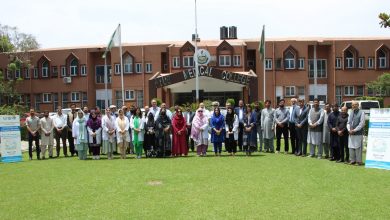
Islamabad: A heated standoff unfolded during a session of the Sub-Committee on National Health Services, chaired by Dr. Amjad Ali Khan, as the Federal Board of Revenue (FBR) came under fire for withholding information on tax-exempt private hospitals in Islamabad. The clash exposed a long-standing lack of transparency and raised serious concerns about how elite medical institutions may be exploiting charitable status without proper public oversight.
The confrontation began when committee members questioned the FBR about which hospitals like Shifa Internationl. Maroof Internationl, Kalsum Internationl etc in the capital had been granted tax-exempt status—typically under the guise of operating as trusts or charitable organizations. The FBR representative immediately invoked Section 216 of the Income Tax Ordinance, asserting that it forbids the disclosure of taxpayer-specific information to any party, including Parliament itself. Even when offered the option of a closed-door session to ensure confidentiality, the FBR maintained its hardline stance, citing the absolute nature of the legal restrictions.
Lawmakers Grill IHRA Over Conflict of Interest and Regulatory Lapses
This position sparked visible frustration among the committee members. The convener and several lawmakers argued that their request was not for individual tax records or financial returns, but simply for a general list of hospitals that had officially received tax-exempt designation. They emphasized that such information—identifying which institutions were operating as registered charities—should be a matter of public record, not shrouded in secrecy.
The committee went further, challenging the FBR’s interpretation of the law by invoking the principle of parliamentary supremacy. The convener questioned whether Section 216 could legally override the oversight authority of Parliament—the very institution that enacts such laws.
A critical link was also drawn to the Pakistan Center for Philanthropy (PCP), which was established during the Musharraf era to certify charitable entities. Under this model, once an organization received PCP certification, the FBR would grant tax-exempt status. However, committee members noted that the PCP had become largely dysfunctional and exploitative, charging steep fees while failing to deliver on its mandate. As a result, the process of certifying and approving tax-exempt status had devolved into opacity and inefficiency.
The turning point in the impasse came when a senior committee member pointed to a significant provision in the recently passed Finance Bill. This clause explicitly permits the FBR to share taxpayer information with banks—undermining the FBR’s claim of blanket secrecy. Another member added that the full schedule of tax-exempt entities is publicly available within the Finance Bill itself, thus rendering the FBR’s refusal both legally and logically untenable.
Cornered by these revelations, the FBR representative was forced to concede. He acknowledged that a general list of tax-exempt hospitals could, in fact, be shared, as it was now part of the public domain.
The committee concluded the session by issuing direct instructions to the FBR: the representative must return on the 9th of the month with the full list of tax-exempt hospitals operating in Islamabad, accompanied by his legal team.