The Pakistan Information Commission has ruled that the Islamabad Club qualifies as a public body under the Right of Access to Information Act, 2017, and has directed the club to provide a citizen with detailed records about its operations, membership and finances. The decision was announced by Chief Information Commissioner Shoaib Ahmed Siddiqui and Information Commissioner Ijaz Hassan Awan.
The case began after citizen Saddia Mazhar requested information from the Secretary of the Islamabad Club on total membership and criteria for admission, leases of properties and outlets, events held at Rawalpindi Gymkhana Club, affiliated trainers and their salaries, audit reports, land holdings and any government funds or grants received since January 2024. The commission examined the full scope of the request and determined it related to public records held by the club.
The Islamabad Club initially resisted the request, arguing that the applicant was not a member and therefore lacked locus standi, that some matters were already before the Islamabad High Court, that the club did not receive federal funding and that it did not possess a juristic personality that would make the request maintainable. The commission considered these points in its review.
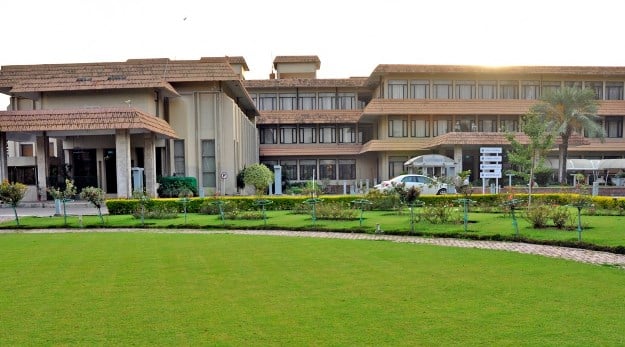
The PIC found that the Islamabad Club benefits from state resources and government oversight, noting that the club occupies 352 acres of state land under a nominal lease of Rs. 1 per acre and is administered by government-appointed authorities under the Islamabad Club (Administration) Ordinance, 1978. The commission cited Sections 2(ix)(a), (b) and (h) of the Right of Access to Information Act, 2017 in concluding that the Islamabad Club functions as a public body, and it emphasised that the President of Pakistan serves as the club’s patron.
After assessing submissions from both sides, the commission observed that the Islamabad Club had not claimed any exemptions under the RTI law for the requested records. The only exception identified was information about events at Rawalpindi Gymkhana Club, which is a separate entity. The PIC ordered the Secretary of the Islamabad Club to provide the requested documents to Saddia Mazhar and to the commission within 10 days.
The ruling reinforces the principle that organisations managing public land and operating under government-appointed management are accountable under Pakistan’s transparency laws. The commission reiterated that every Pakistani citizen has the right to access information from public bodies, regardless of membership status, and that public interest in the management of communal assets like the Islamabad Club warrants disclosure and oversight.