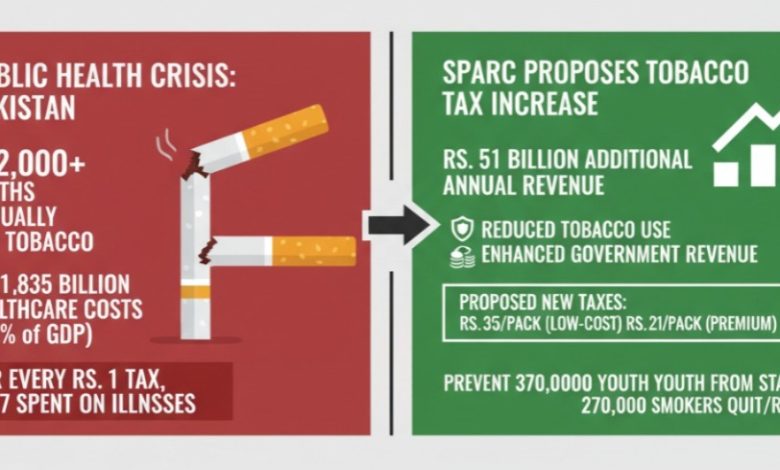
Islamabad— The Society for the Protection of the Rights of the Child (SPARC) says a strengthened tobacco tax could both improve public health and bolster government finances by generating an estimated Rs. 51 billion in additional annual revenue through a targeted tobacco tax increase.
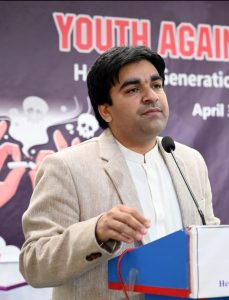 Dr. Khalil Ahmad, Program Manager at SPARC, underlined the importance of reinforcing cigarette taxation amid Pakistan’s fiscal challenges. International evidence shows that higher tobacco taxes reduce consumption, raise revenue and lower long‑term healthcare costs, and SPARC notes the same outcomes could follow here if policymakers act on tobacco tax reform.
Pakistan carries a heavy tobacco burden, with roughly 31 million adults using tobacco products and about 192,000 tobacco‑related deaths each year, equivalent to nearly 526 deaths per day. These fatalities are driven mainly by cardiovascular disease, cancers and other smoking‑related illnesses. SPARC also notes that Federal Excise Duty rates on cigarettes have not been increased since February 2023, reducing the tax share of retail prices and making low cost brands increasingly affordable.
While fuel and essential commodity prices have risen steadily, cigarette taxation has remained largely static since 2023. This divergence has effectively increased cigarette affordability in real terms, particularly for cheaper brands, and risks higher youth uptake unless tobacco tax policy is adjusted.
The economic toll of tobacco is substantial. SPARC estimates health‑related costs at about Rs. 1,835 billion, roughly 1.6 percent of GDP, compared with only Rs. 266 billion collected in tobacco tax revenue. In essence, for every rupee gained from tobacco taxes Pakistan spends nearly seven rupees treating tobacco‑related disease, a gap SPARC says can be narrowed through decisive tobacco tax measures.
In its budget proposals, SPARC recommends raising the Federal Excise Duty on cigarettes by Rs. 35 per pack for low cost brands and Rs. 21 per pack for premium brands, with a gradual shift toward a uniform tax structure. SPARC projects the proposed changes could prevent about 370,000 young people from starting to smoke, lead nearly 270,000 current smokers to quit or reduce consumption, and generate up to Rs. 51 billion in additional revenue while reducing healthcare expenditures.
SPARC stresses that aligning Pakistan’s approach with global best practices, including the WHO Framework Convention on Tobacco Control and the MPOWER strategy, will amplify the dual benefits of public health protection and stronger fiscal stability. The organization urges policymakers to prioritise tobacco tax reform in the upcoming federal budget to address affordability, discourage youth initiation and reduce the long‑term economic and health burden of tobacco.