Finance Minister Aurangzeb Calls Population Growth a National Emergency, Announces $20 Billion Commitment Over 10 Years

Finance Minister Aurangzeb Calls Population Growth a National Emergency, Announces $20 Billion Commitment Over 10 Years
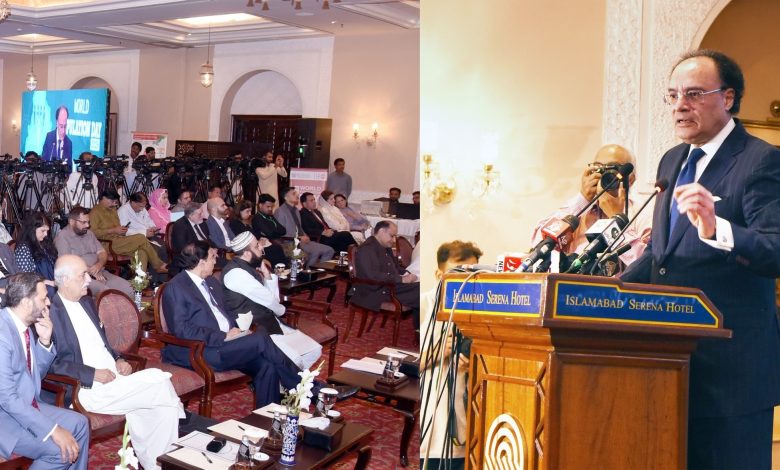
Islamabad: On the occasion of World Population Day 2025, Federal Minister for Finance and Revenue Senator Muhammad Aurangzeb delivered a compelling address urging immediate, nationwide action to address Pakistan’s rapidly growing population and its direct impact on health, education, and sustainable development. Speaking to an audience of lawmakers, ministers, religious scholars, and development experts, the finance minister identified population management as one of two existential challenges—alongside climate change—that threaten Pakistan’s future as a stable and prosperous nation.
Aurangzeb began by outlining the government’s broader vision to reach a $3 trillion economy by 2047, the centennial of Pakistan’s independence. He stressed that such growth would remain out of reach without targeted interventions in population control and climate resilience. Citing the country’s 2.55% population growth rate, he warned that the consequences are already visible: 40% of children under the age of five suffer from stunted growth, jeopardizing Pakistan’s future workforce and leadership.
He specifically highlighted the critical role of birth spacing—an issue he commended Mufti Muhammad Zubair for addressing with depth and clarity. Aurangzeb noted that family planning cannot be tackled with a single intervention. Rather, it must be part of a holistic, end-to-end national strategy that addresses sanitation, clean drinking water, nutrition, education, and religious understanding.
Linking economic planning with human development, the minister questioned outdated budgetary mindsets and urged a unified national perspective. He pointed out that while the federal development budget stands at Rs 1 trillion, a combined Rs 4.2 trillion is available across provinces. He stressed that the real challenge lies not in lack of funding but in strategic allocation and prioritization. “We need to think like a country, not just as federating units,” he said.
Aurangzeb announced that Pakistan has signed a new ten-year Country Partnership Framework with the World Bank. Out of six priority areas, four directly focus on population and climate. Under this framework, $2 billion will be allocated annually—amounting to $20 billion over a decade—toward initiatives that support population stabilization. Of this, $600–700 million per year will be directed specifically toward birth control, public awareness, and maternal health measures.
He emphasized that success will require more than removing taxes on contraceptives. It will demand data-driven planning, multi-sector collaboration, and outcome-focused deployment of resources. “As finance minister, I cannot afford to be complacent,” he said. “We must ensure that funding reaches the right places with the right priorities.”
In closing, the minister lauded Health Minister Syed Mustafa Kamal for convening the gathering within three months of assuming office. He also expressed gratitude to Mufti Zubair for addressing the religious dimension of population control with scholarly authority. Aurangzeb pledged full support from the Ministry of Finance and Revenue, calling the population crisis a national emergency that demands unified efforts from both the public and private sectors.