Parliamentary Taskforce on SDGs Hosts High-Level Post-Budget Session to Align Federal Budget 2025–26 with Development Goals


Islamabad — The Parliamentary Taskforce on Sustainable Development Goals (SDGs), led by Convenor Ms. Shaista Pervaiz Malik, MNA, held a post-budget briefing session titled “Sustainable Development Goals in Focus: A Critical Post-Budget Analysis” at Parliament House. The event aimed to equip parliamentarians with insights to evaluate the Federal Budget 2025–26 through the SDG framework, ahead of the upcoming budget debate in the National Assembly.
The session saw participation from the Minister of State for Law and Justice, Mr. Aqeel Malik, Parliamentary Secretaries, Members of the National Assembly, and economic experts. Key briefings were delivered by Dr. Ali Salman of the PRIME Institute and Dr. Abid Qayyum Sulheri from the Sustainable Development Policy Institute (SDPI).
During the session, lawmakers raised urgent concerns on health, education, taxation, women’s economic empowerment, and poverty alleviation. MNA Ms. Asia Naz Tanoli highlighted rising school dropout rates, poor teacher training, and the threat of diseases like polio, dengue, and diabetes. She called on the Taskforce to use mass media for awareness, a proposal supported by Ms. Malik.
Climate change coordinator Ms. Romina Khursheed Alam objected to taxation on essential dairy products, while MNA Zahra Wadood Fatemi advocated for higher taxes on unhealthy processed foods due to their public health risks.
Ms. Rana Ansar stressed better enforcement of minimum wage laws and transparency in the Benazir Income Support Programme (BISP), alongside integrating women into cottage industries through skills-based training. She also flagged mental health as a budget priority, which the Convenor acknowledged as already under consideration.
Women’s Parliamentary Caucus Secretary Dr. Shahida Rehmani voiced concern over taxation’s impact on online women entrepreneurs and called for direct development funding to women lawmakers. Ms. Sabheen Ghoury emphasized using BISP funds to support SMEs, while Syed Hafeez Uddin proposed enhancing BISP’s design to tackle rising poverty.
MNA Syed Ali Qasim Gillani reaffirmed BISP’s role as a holistic social protection framework and praised the Benazir Nashonuma initiative, calling the program a “gold standard.” MNA Muhammad Aslam Ghumman criticized low allocations for health, education, and agriculture, urging better compensation for farmers.
Ms. Sharmila Sahiba Faruqui Hashaam welcomed budget allocations addressing poverty and urged greater investments aligned with SDGs 9 (Industry, Innovation and Infrastructure) and 11 (Sustainable Cities and Communities). Both Ms. Malik and former Taskforce Convenor Mr. Riaz Fatyana emphasized the need to avoid lapsing SDG-related funds across ministries to ensure progress toward the 2030 Agenda.
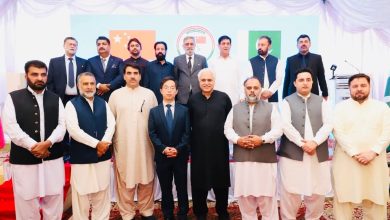
The session concluded with a group photograph, as Ms. Malik thanked all attendees for their contributions. Participants in turn appreciated the Taskforce for organizing a timely, constructive dialogue linking the national budget with global development commitments.