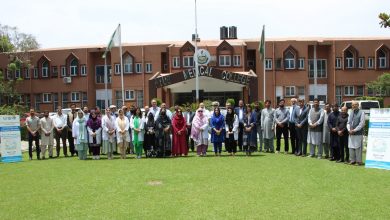
Al-Nafees Controversy Deepens as Students Blame PMDC for Academic Deadlock


Federal Inquiry Launched into Al-Nafees Medical College Over Student Failures and PMDC Intervention
By Nadeem Tanoli
Islamabad: An escalating academic dispute involving 11 final-year students from Al-Nafees Medical College has prompted the federal government to initiate a formal inquiry, amid allegations of procedural irregularities, academic contradictions, and abrupt interference by the Pakistan Medical and Dental Council (PMDC). The controversy has raised serious concerns about student rights, regulatory overreach, and the integrity of internal assessment practices within Pakistan’s medical education system.
The affected students, members of the 2024 graduating class, say they have been trapped in academic limbo for nearly 10 months. According to their account, they were failed twice—first in the final professional examination due to low internal assessment scores, and then again in the supplementary exam, which they argue should be evaluated independently of prior internal assessments. While their peers have advanced to complete half of their house jobs, these students remain academically and professionally stalled.
The students explained that under the university’s grading structure, the final result comprises 40% internal assessment and 60% final exam marks. They were initially failed based on low internal marks and directed to appear in the supplementary exam, which they believed would be assessed on its own merit. After sitting the supplementary exam—which they say they passed—they were once again failed on the same internal grounds, a move they described as a double penalty for the same deficiency.
In response, the university reportedly acknowledged its error and organized a remedial internal assessment in April. However, before the result could be announced, PMDC intervened—allegedly after receiving an anonymous complaint—and instructed the college to halt the process and submit a justification. The college, following PMDC’s order, reversed its stance, withheld the results, and deferred further action to the regulatory body.
PMDC, however, presented a starkly different version of events. Officials claimed their intervention followed a written complaint endorsed by politician Tariq Fazal Chaudhry and filed by students who had passed in the regular cycle. The complaint alleged that Al-Nafees was preparing a “super supplementary” exam to unfairly elevate detained students, thus undermining merit.
In a statement to PMDC, the principal of Al-Nafees Medical College denied conducting any special exam and asserted that the 11 students had failed the regular supplementary exam. He clarified that the remedial internal test was offered only to help the students prepare for the next annual exam with the junior cohort, where the improved internal score could then be considered. PMDC further argued that the students had not provided any evidence of having passed the supplementary paper and were operating under a false assumption that passing the remedial assessment would automatically qualify them.
During the parliamentary session, MNA Dr. Amjad, a committee member with a medical background, emphasized a key procedural principle: while low internal marks can prevent a student from sitting the annual exam, they cannot legally be used to fail a student in a supplementary exam. This interpretation lent significant weight to the students’ argument that they were unjustly failed.
To settle the matter, the parliamentary committee rejected the conflicting narratives and instructed the Ministry of National Health Services to launch an independent inquiry. The ministry is directed to summon the principal of Al-Nafees Medical College, the 11 affected students, and relevant PMDC officials. It will also requisition the original supplementary exam papers for review.
The committee chairman clarified the terms of resolution: “If you have passed, you have passed. If you have failed, you have failed.” The inquiry will also determine whether the failures occurred in the written portion or the viva, as distinct internal assessment rules apply to each.